Jurmo, outer Turku archipelago · 16 June–14 September 2026 · John Nurminen Foundation, Meren puolella · Suomeksi
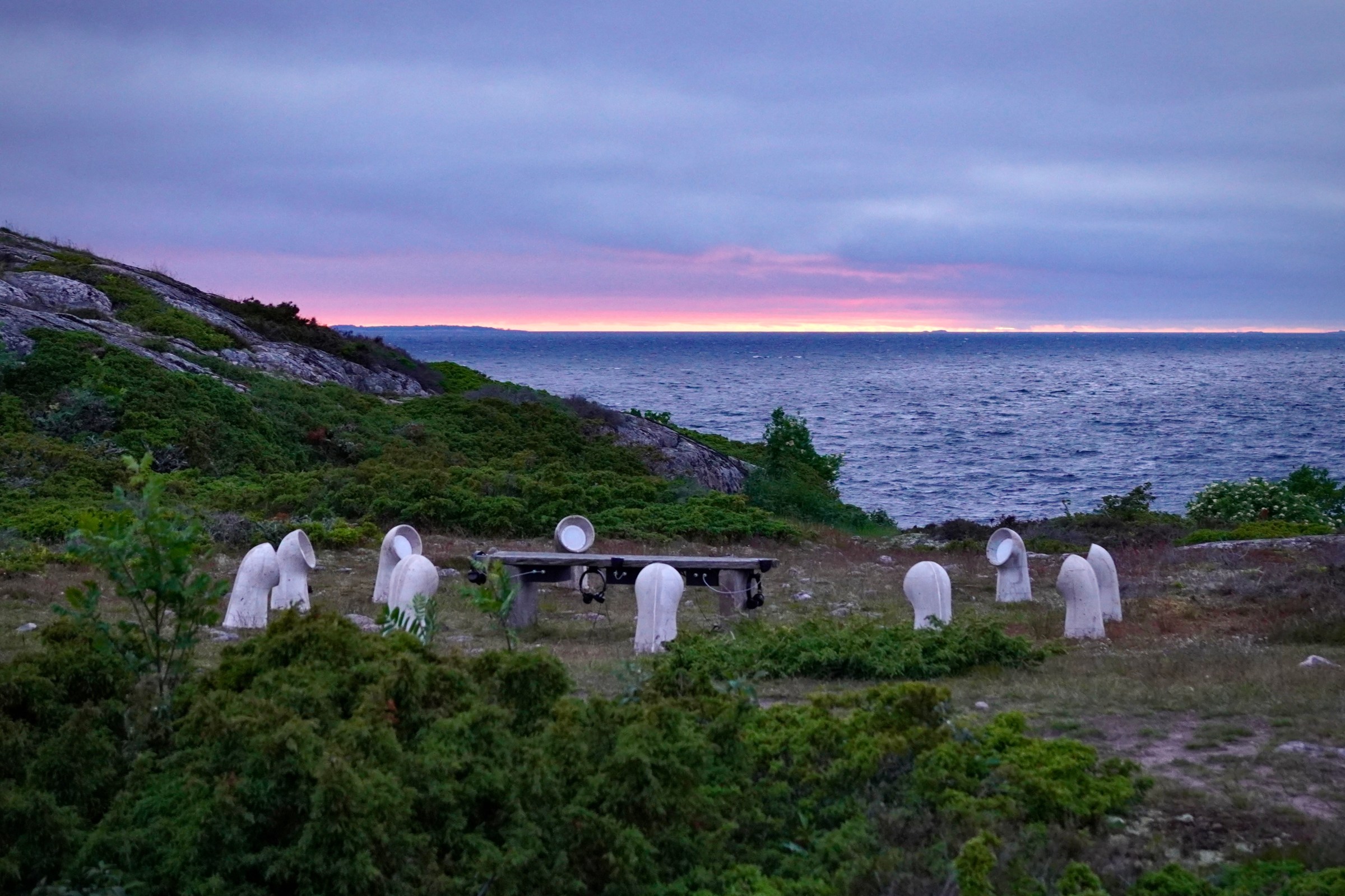
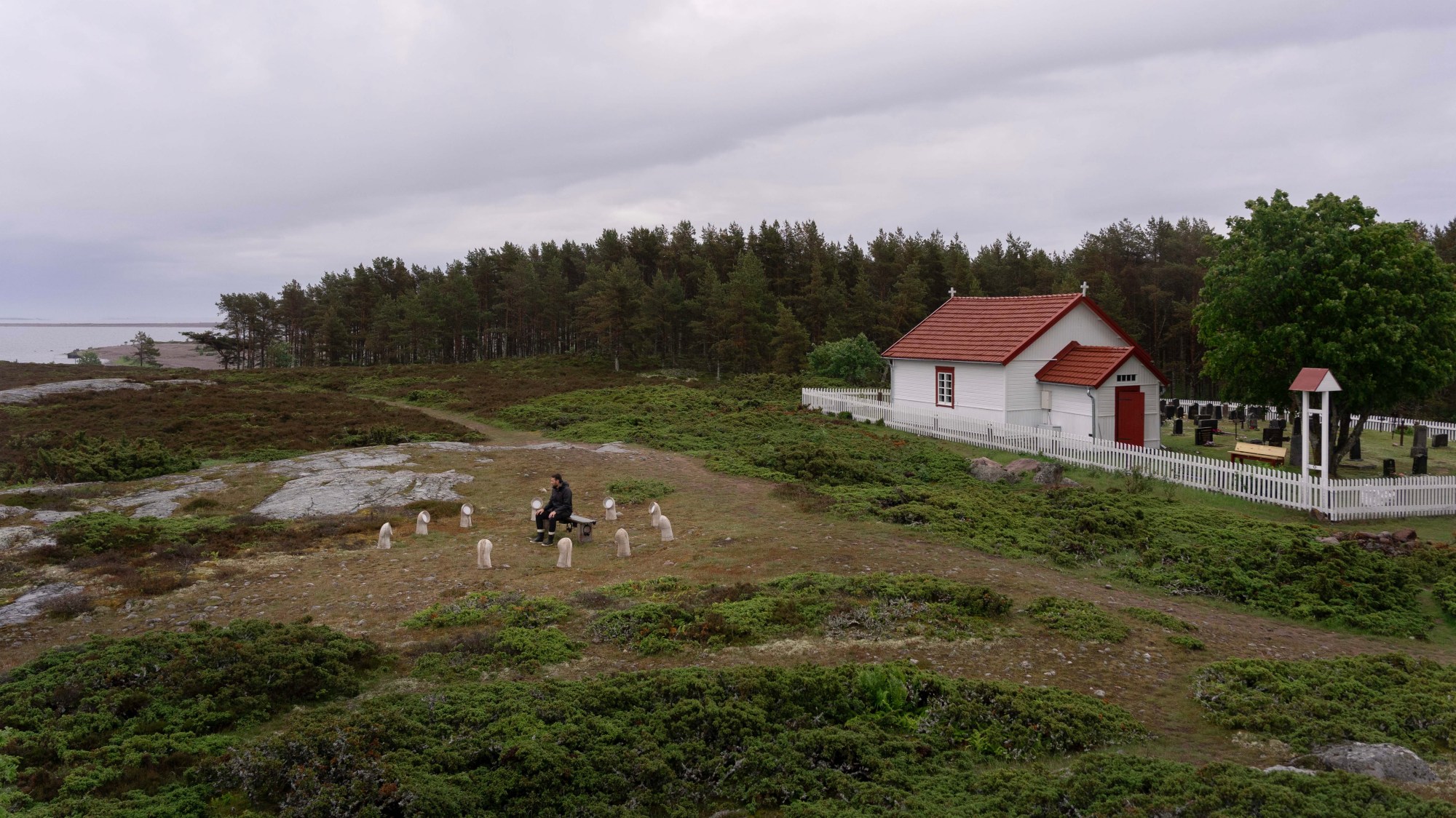
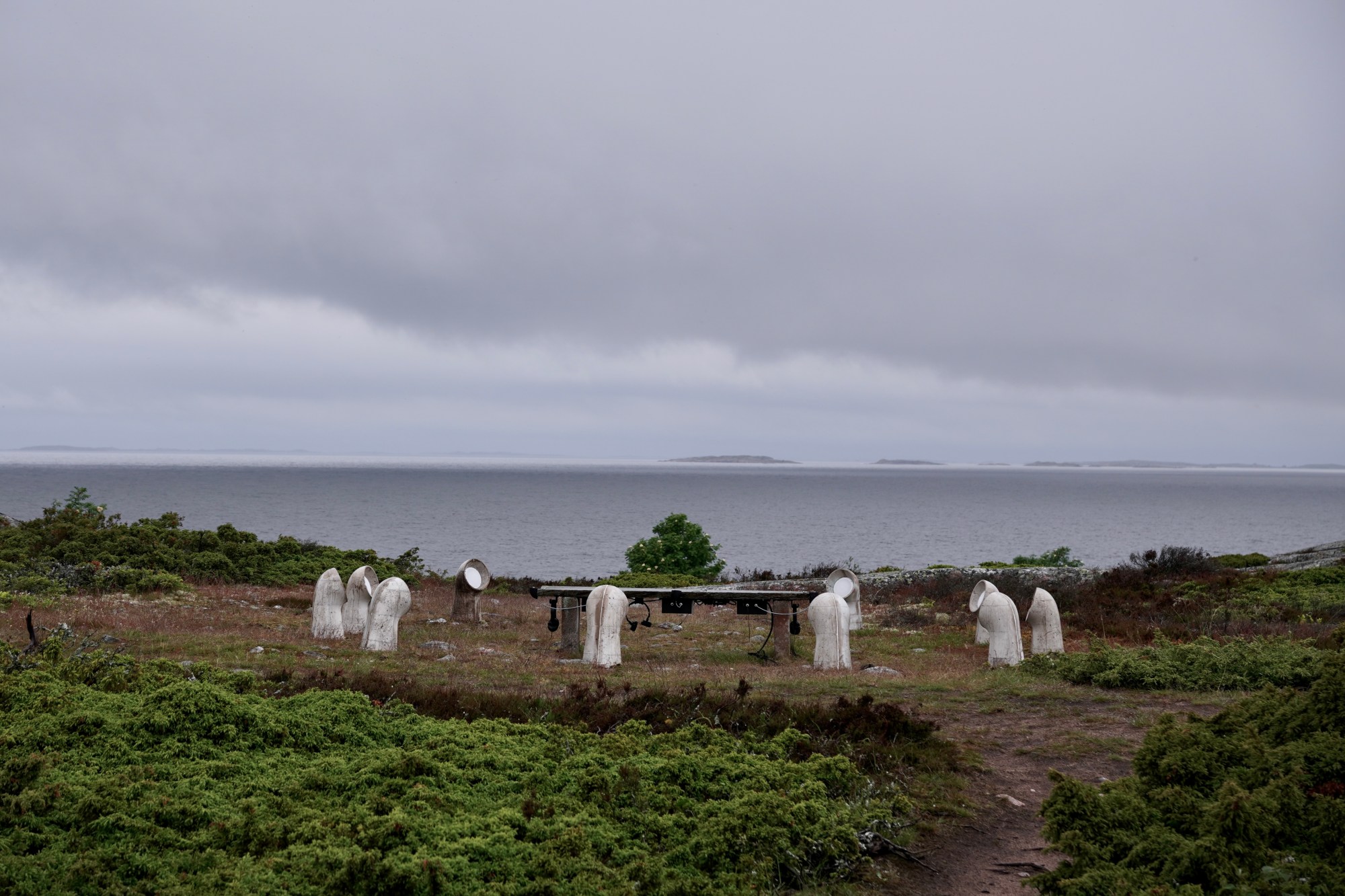
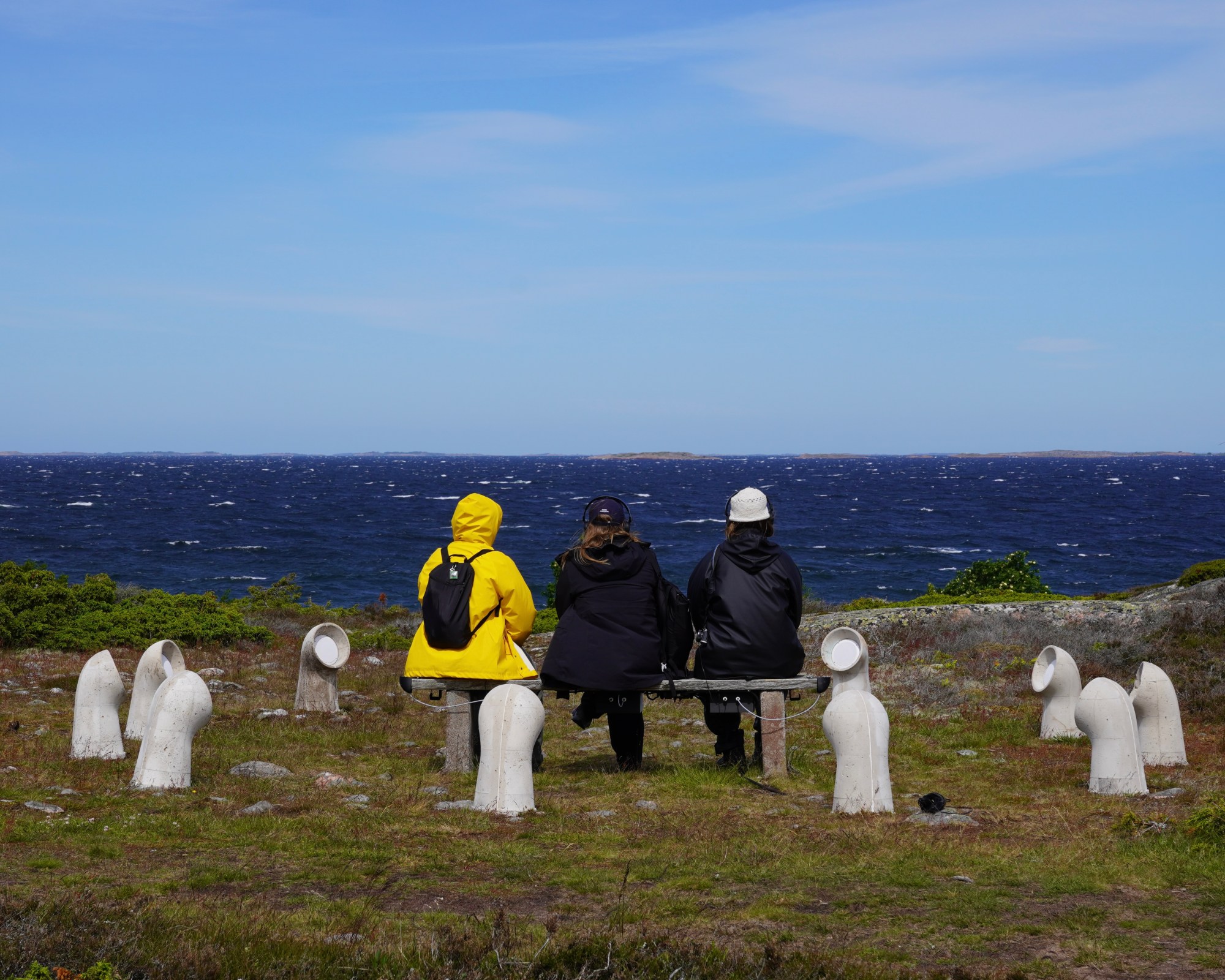
INTER, Jurmo was an outdoor listening installation beside the chapel and cemetery on Jurmo in the outer Turku archipelago, presented in summer 2026. A bench facing the sea offered a place to listen among recorded voices, the island’s sounds and changing weather.
Its Finnish subtitle, Meri kuuntelee meissä, The Sea Listens in Us, names the sea as a condition that has shaped memory, work, language and belonging.
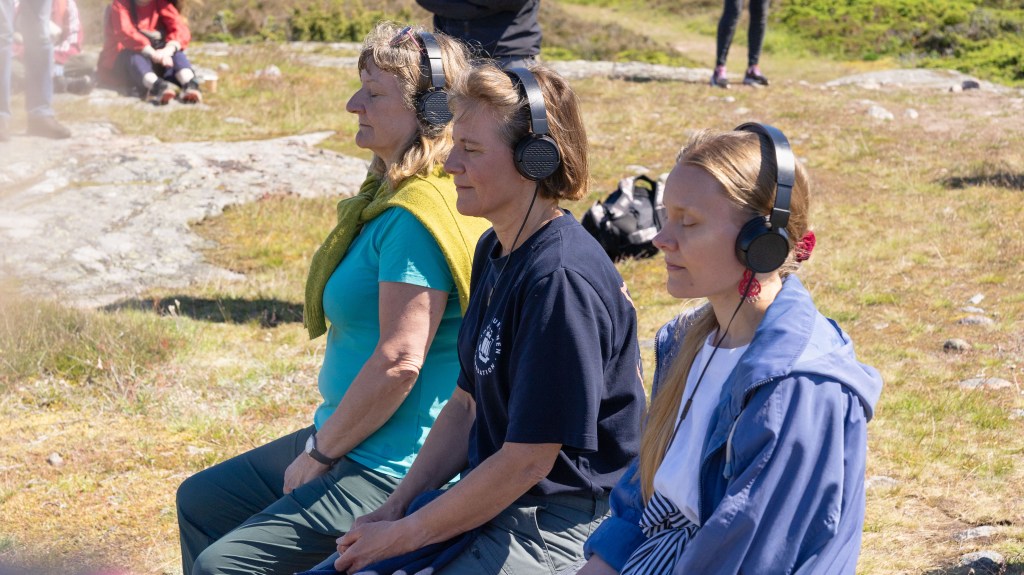
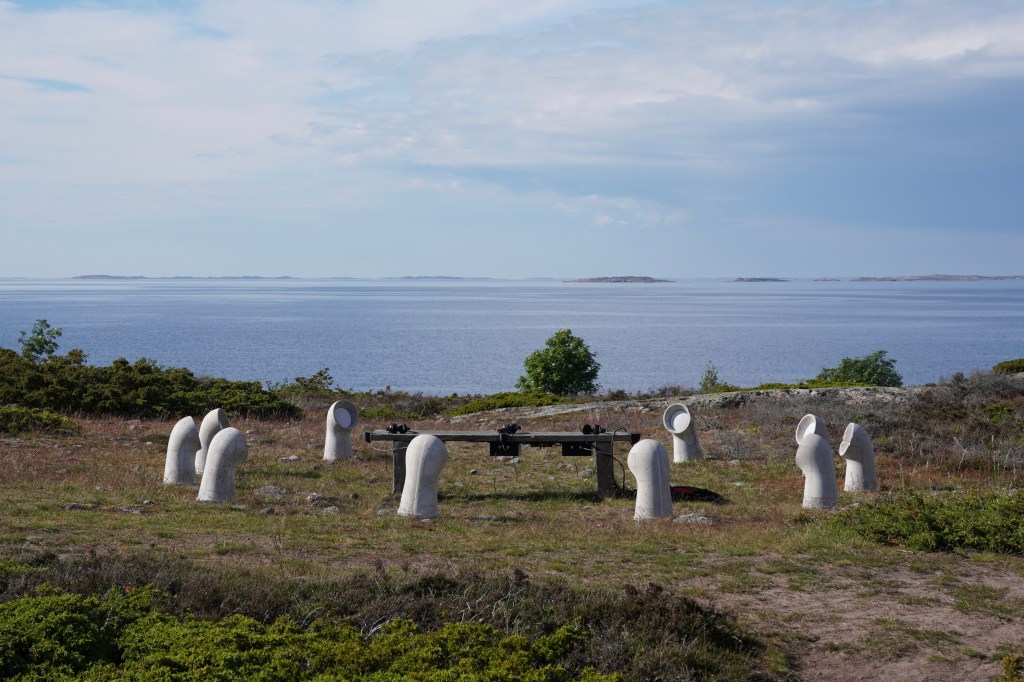
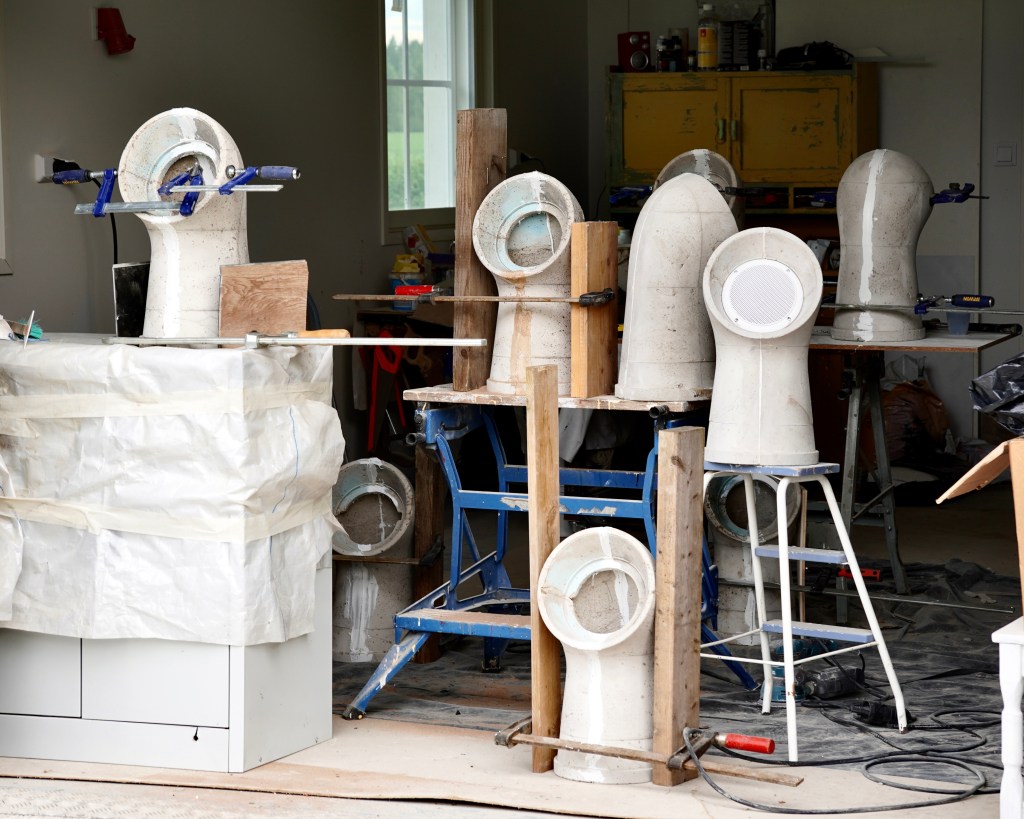
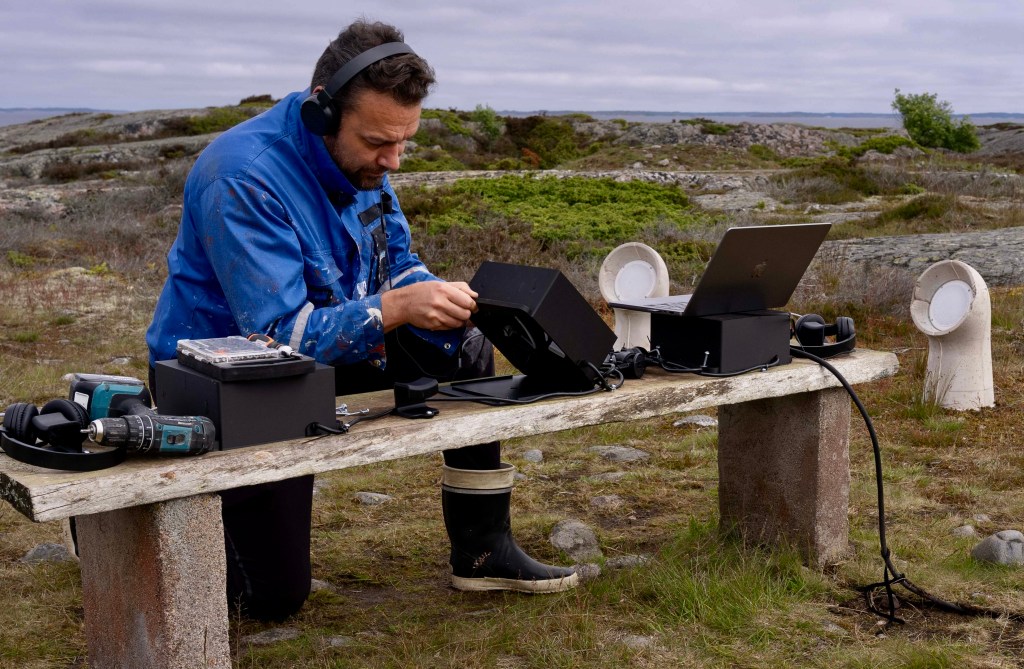
Ten hand-cast concrete horn speakers carried voices recorded with people connected to Jurmo and tones composed from the chapel’s pump organ. Three headphone listening points offered narration in Finnish, Swedish and English. Visitors could listen to the speaker field and the surrounding sea from the bench, or use headphones to follow the spoken piece.
Listening before defining
The recorded voices speak from ordinary life: work, childhood, loss and daily attention. Some belong to people who live on the island, others to those whose families return here.
The listener may feel outside the island, outside the community, outside what is being heard. That distance is not treated as a failure. It becomes part of the listening.
Recording field
The recordings took place over nine days in spring 2026. Thirty people and thirty microphones formed one shared recording field. The conversations moved through ordinary life in Finnish and Swedish: boats, children, smoke, fish, work, weather, animals, relatives, phone signal, stone shores and things that should not disappear.
At a certain point, one question changed the rhythm of the room:
What is the sound or phenomenon without which Jurmo would no longer be Jurmo?
This question became the conceptual foundation of the work. The answers did not define the island. They opened a field of memory, use, care, fear, distance and belonging, where the sea appeared through the ordinary things people spoke about.
Process and material
The work was developed through recordings, conversations, listening sessions, material tests and on-site adjustments. The process was not separate from the final form. It was the way the work learned the conditions of the island.
The outdoor speakers were built for Jurmo’s weather and distance. Their form is drawn from ships’ ventilation flues and marine cowl vents: channels that connect spaces rather than point in a single direction. The speaker bodies are hand-cast concrete made from cement, fine sand, peat, soot and local surface material, so that they could recede into the ground, stones and weather of the island. Over time, they may gather moss and other traces close to the stones of Jurmo.
Jurmo chapel’s pump organ was recorded note by note. From these tones, a low, foghorn-like sound was composed. It moves between the recorded voices and helps bind the listening field together.
The material was not cleaned into purity. Speech was allowed to remain speech. Wind was allowed to remain wind.
Public listening
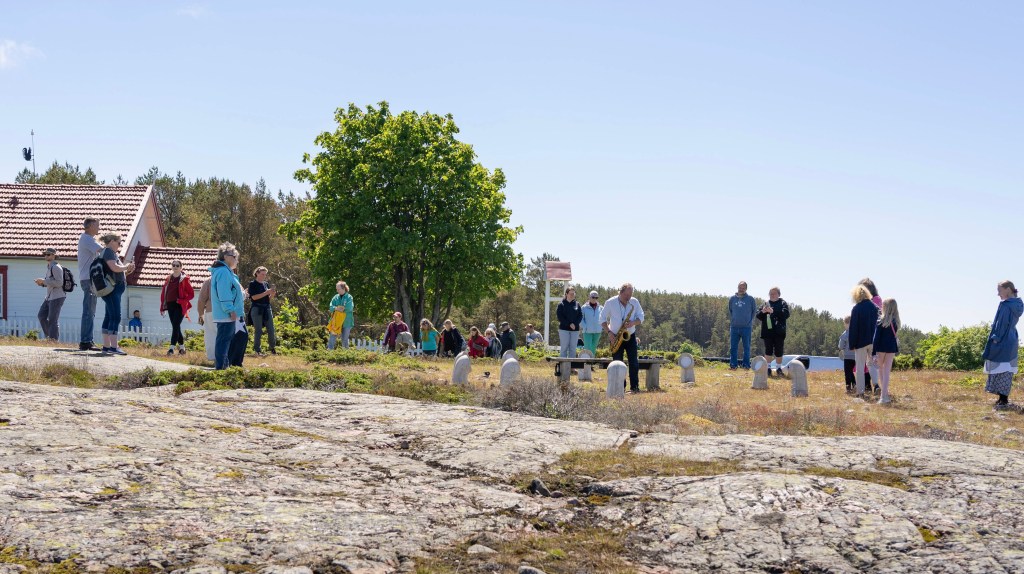
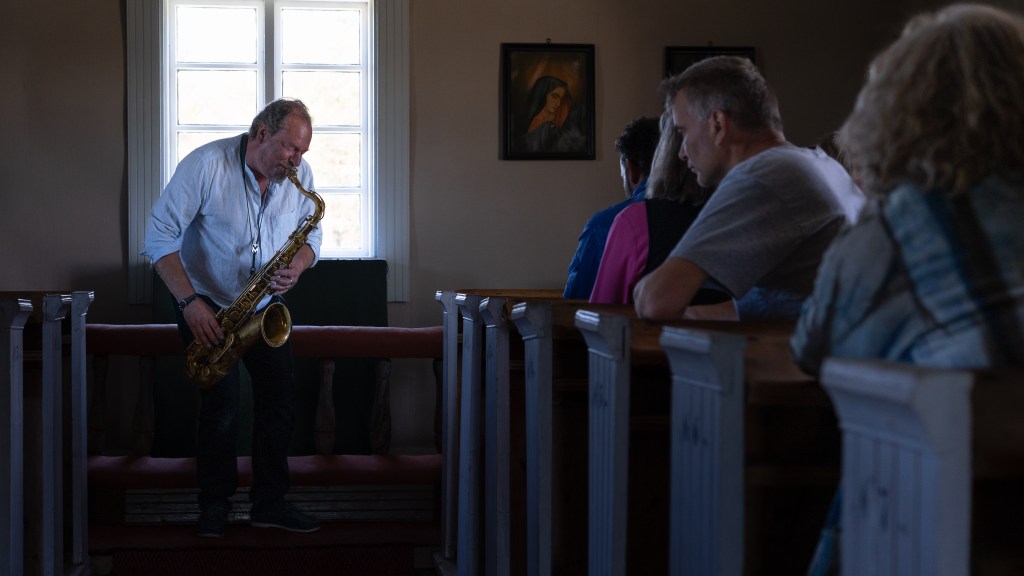
INTER, Jurmo opened on 16 June 2026. Saxophonist Esa Pietilä began in Jurmo chapel, then walked into the installation. Jaakko Autio started the recorded sound, and everyone stayed to listen before the speeches. Afterwards, the gathering continued at Jurmo Inn over a meal prepared by Tiina Johansson.
After the opening, the installation remained on the island as a public listening environment throughout the summer. The work did not ask for a separate art space. It stayed where the island was already being crossed, visited, remembered and lived with.
Artist book
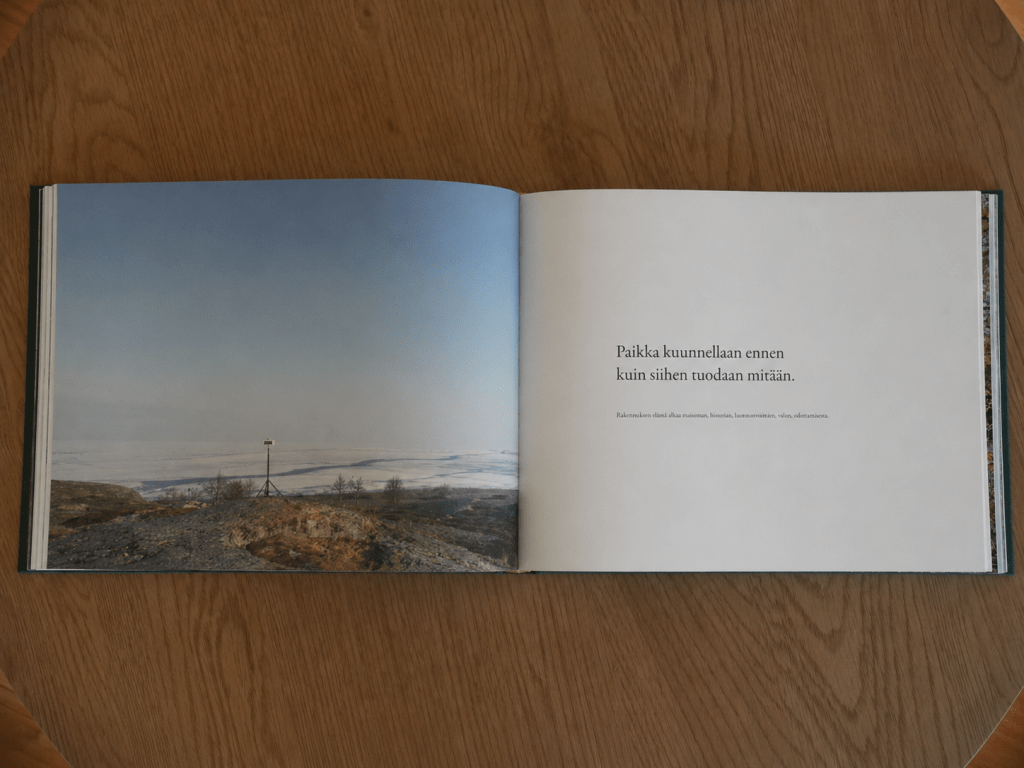
Meri kuuntelee meissä is a trilingual artist book accompanying INTER, Jurmo. It gathers photographs, field notes and fragments from the recording process. Finnish carries the artist’s process, Swedish belongs to the island’s everyday speech, and English opens the work to visitors arriving from further away.
The 2026 exhibition ran from 16 June to 14 September. This page documents that presentation through photographs, video and the artist book.
Credits
Concept, recordings, composition and spatial installation
Jaakko Autio
Voices
Inhabitants of Jurmo and people closely connected to the island
Narration
Hilla Väyrynen, Tiina Johansson and Aino Mattsson
Saxophone at the opening
Esa Pietilä
Collaboration
John Nurminen Foundation, Meren puolella programme
Support
Visual Arts Display Grant, Arts Promotion Centre Finland (TAIKE)
Photos
Jaakko Autio, and Joonas T. Laine where noted
INTER can be developed for other sites and communities. Information for curators · All works

