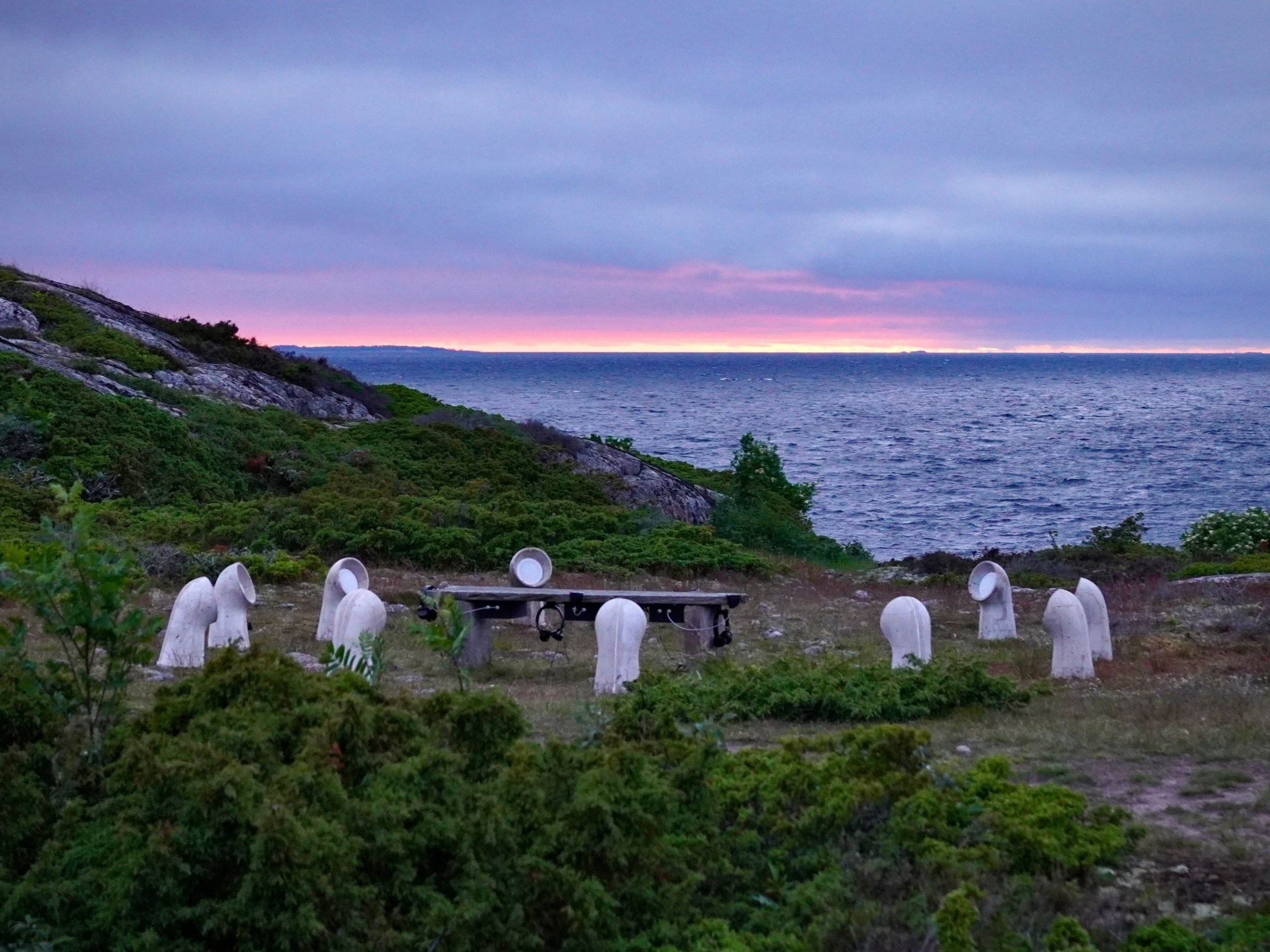
INTER, Jurmo is a spatial listening architecture situated on the island of Jurmo in the outer Turku archipelago.
Its Finnish subtitle, Meri kuuntelee meissä, The Sea Listens in Us, names the central movement of the work. The sea is not approached as a distant landscape or as a subject to be represented, but as a condition that has shaped perception, memory, work, language, breath, and belonging.
The work begins from a simple method: the place is listened to before anything is brought into it.
From a bench near the chapel and cemetery, the listener sits inside a field already full of voices, wind, weather, silence, and distance. The recordings were made with inhabitants and people whose lives, families, or memories are closely connected to Jurmo. Their voices are not asked to represent the island. They return to the place that has shaped them.
The recordings move between Finnish and Swedish, as the island itself does. English opens the work to those arriving from further away. The languages do not simply repeat one another. They carry different distances to the same place.
During the recordings, Jurmo appeared through ordinary things: boat engines, work parties, fish, algae, phone signal, children, relatives, stone shores, wind, and the silence between sounds. The material does not lift everyday speech into symbolism. It lets it remain close to the life from which it came.
INTER, Jurmo approaches listening as a shared structure between place, community, environment, and the listener’s own attention. The work does not ask what the sea means from a distance. It listens to how the sea, weather, work, language, and memory have already moved through the people connected to the island.
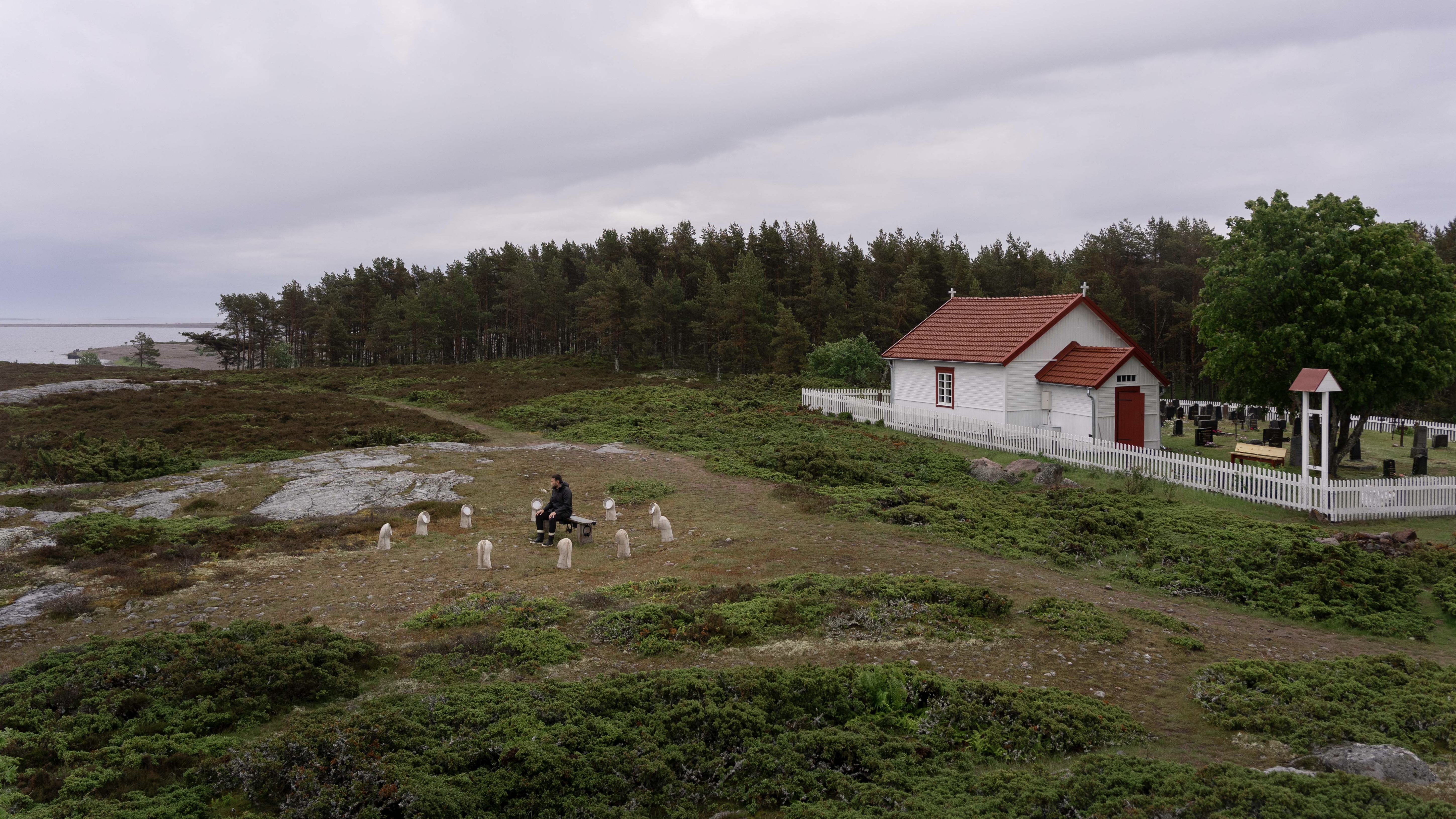
INTER, Jurmo installation situated between the chapel, cemetery and Baltic Sea landscape, with artist Jaakko Autio seated in the listening environment. Photo: Joonas T. Laine
Listening before defining
In INTER, Jurmo, listening begins before definition. The sea is not humanised, symbolised, or turned into a distant image. It is approached through relations that already exist: work, weather, fear, care, memory, distance, and return.
The recorded voices speak from ordinary life. Some belong to people who live on the island. Some belong to those whose families return here. Some speak from work, some from childhood, some from loss, some from daily attention. They are not asked to represent the sea or explain the island. They return to the place that has shaped them.
Their voices form the human horizon of Jurmo. They move between Finnish and Swedish, between memory and practical speech, between what has changed and what should not disappear. English opens the work to those arriving from further away. The languages do not simply repeat one another. They carry different distances to the same place.
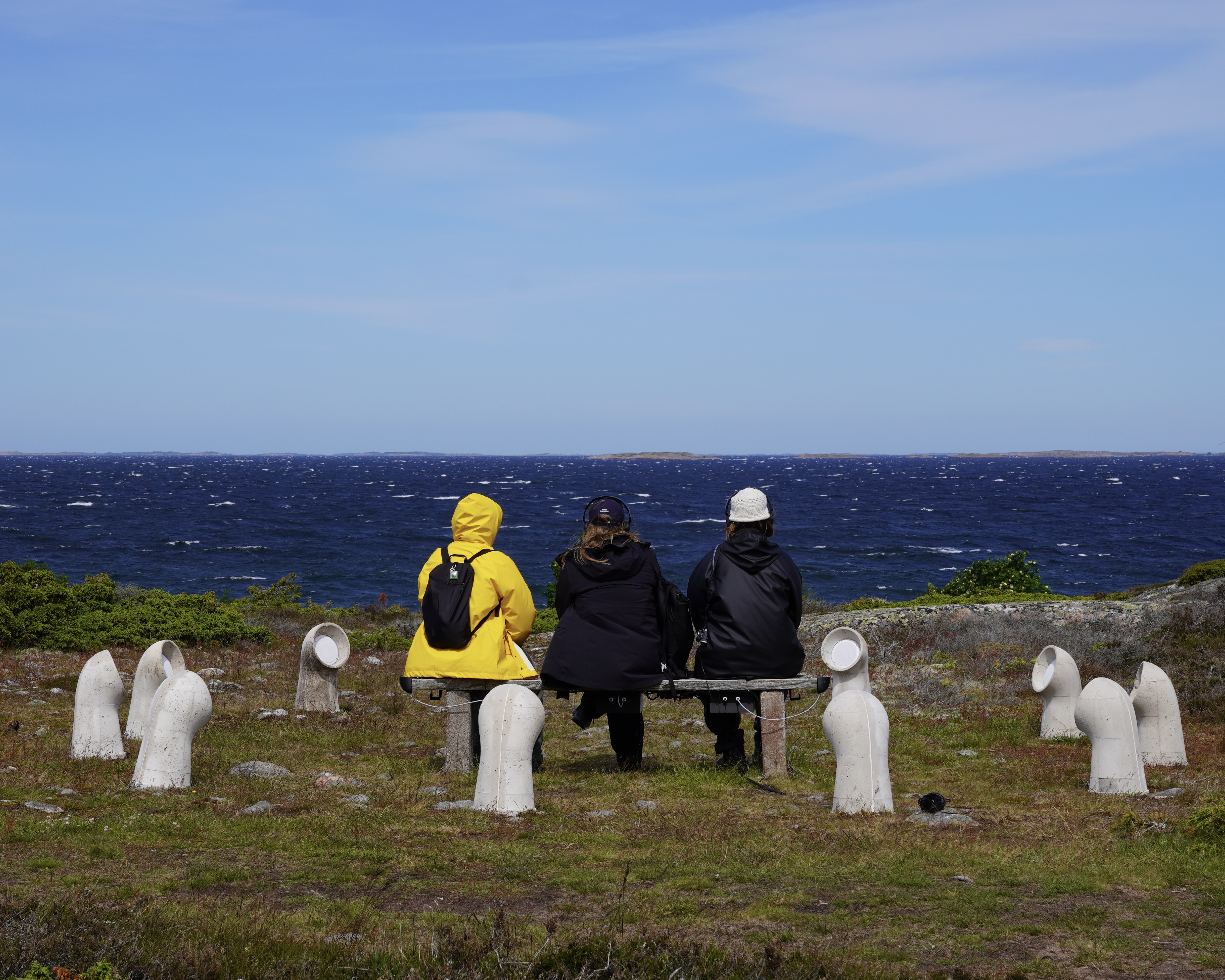
From the bench between the chapel, the cemetery, and the sea, the listener does not enter silence. They sit inside a field already full of voices, wind, weather, overlapping fragments of speech, and distance. Closing the eyes does not remove the place. It changes how the place is met.
The black field behind the eyelids becomes another surface of listening. Breath, noise, voices, and weather begin to move in the same field, while the surrounding voices remain close to the life from which they came. The sea remains low behind everything, not as a view to be contemplated, but as a condition already moving through speech, memory, and attention.
The listener may feel outside the island, outside the community, outside what is being heard. That distance is not treated as a failure. It becomes part of the listening.
Here, empathy is not a feeling directed toward the sea. It is a shift in attention: a way of letting place, community, language, and distance be heard before they are defined.
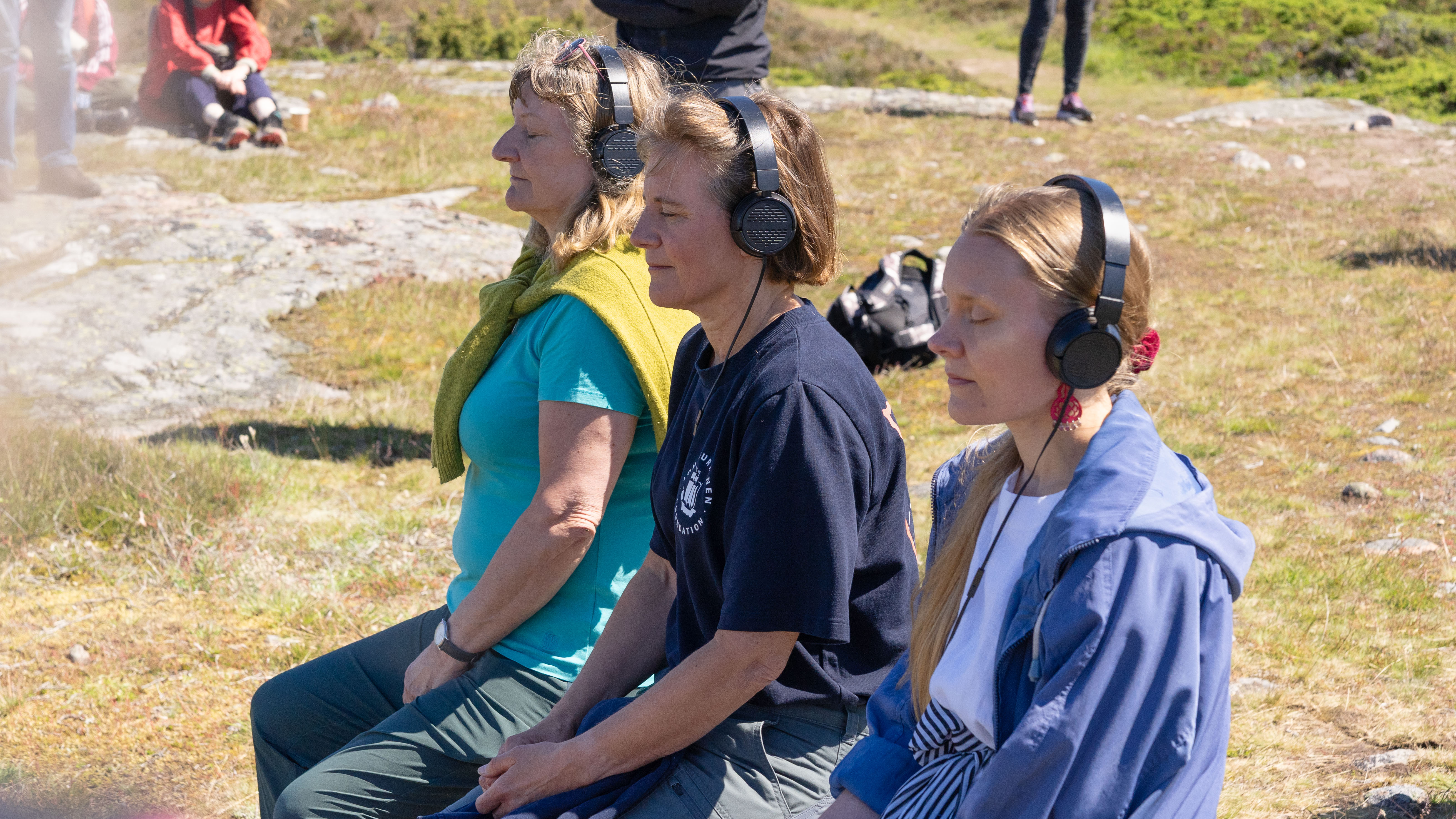
Visitors listening to INTER, Jurmo during the opening event. Photo: Joonas T. Laine
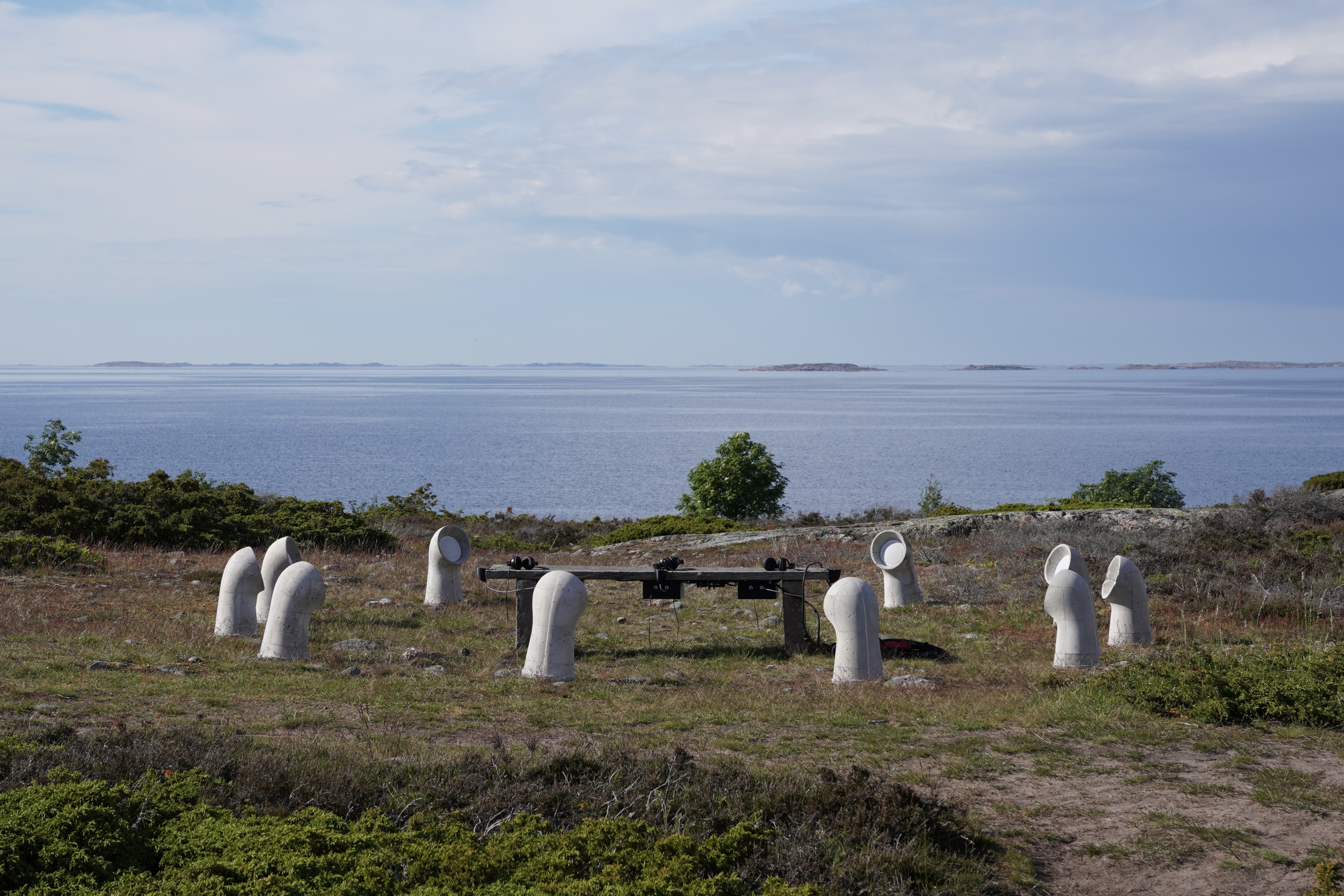
INTER, Jurmo outdoor listening field, with the sea in the background and the speakers arranged in a circle.
Recording Field
The recordings took place over nine days in spring 2026. Thirty people and thirty microphones formed one shared recording field.
The conversations moved through ordinary life in Finnish and Swedish: boats, children, smoke, fish, work, weather, animals, relatives, phone signal, stone shores, and things that should not disappear.
At a certain point, one question changed the rhythm of the room:
What is the sound or phenomenon without which Jurmo would no longer be Jurmo?
This question became the conceptual foundation of the work. The answers did not define the island. They opened a field of memory, use, care, fear, distance, and belonging, where the sea appeared through the ordinary things people spoke about.
Artist Book
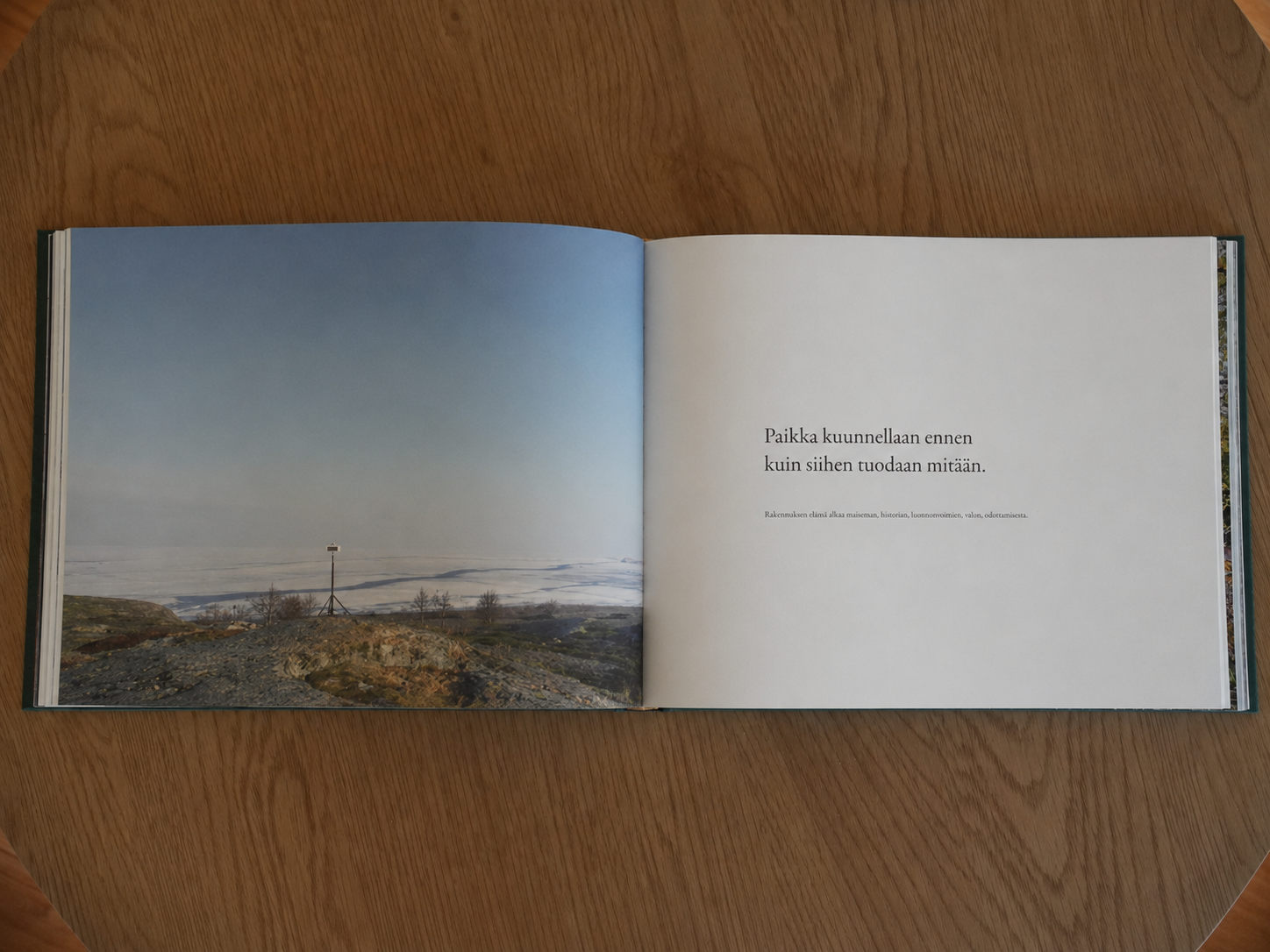
Meri kuuntelee meissä is a trilingual artist book accompanying INTER, Jurmo.
The book gathers photographs, field notes, and fragments from the recording process into a quieter account of how the work came into being. It follows the same language structure as the installation: Finnish carries the artist’s process, Swedish belongs to the island’s everyday speech, and English opens the work to visitors arriving from further away.
The languages do not simply repeat one another. They carry different distances to the same place.
[Download the artist book PDF]
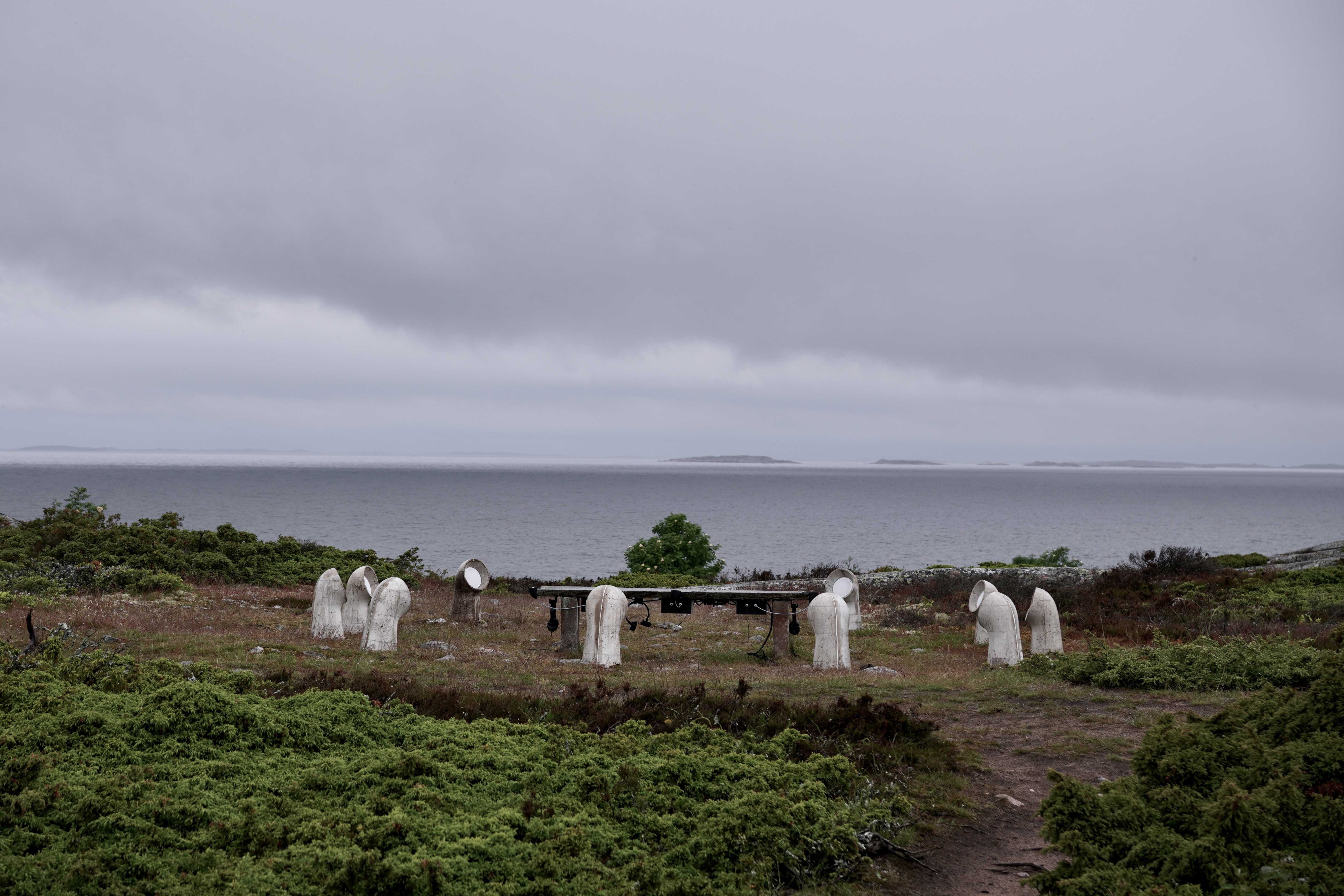
INTER, Jurmo during changing weather conditions in the outer archipelago.
When the voices recede, the island remains: wind, sea, distance, open horizon.
Public Listening
INTER, Jurmo opened on 16 June 2026 on Jurmo island.
The opening brought together island residents, summer visitors, collaborators, and people connected to the recording process. Around the chapel and cemetery, sound, conversation, listening, and live performance met the weather and the open sea.
After the opening, the installation remained on the island as a public listening environment throughout the summer. Visitors could sit on the bench, listen to the voices returning through the circle peakers, and meet the work within the ordinary movement of the island.
The work did not ask for a separate art space. It stayed where the island was already being crossed, visited, remembered, and lived with.
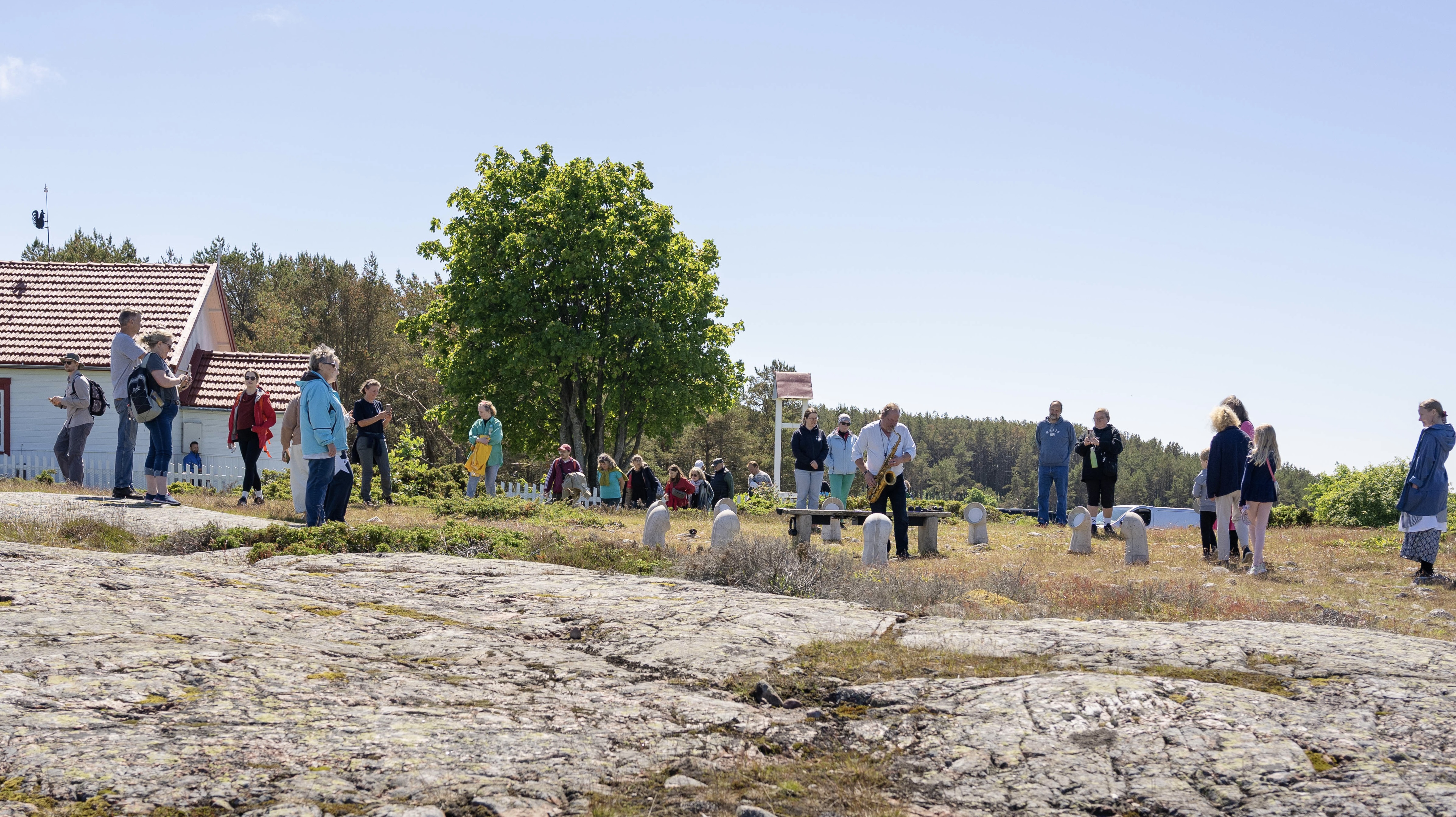
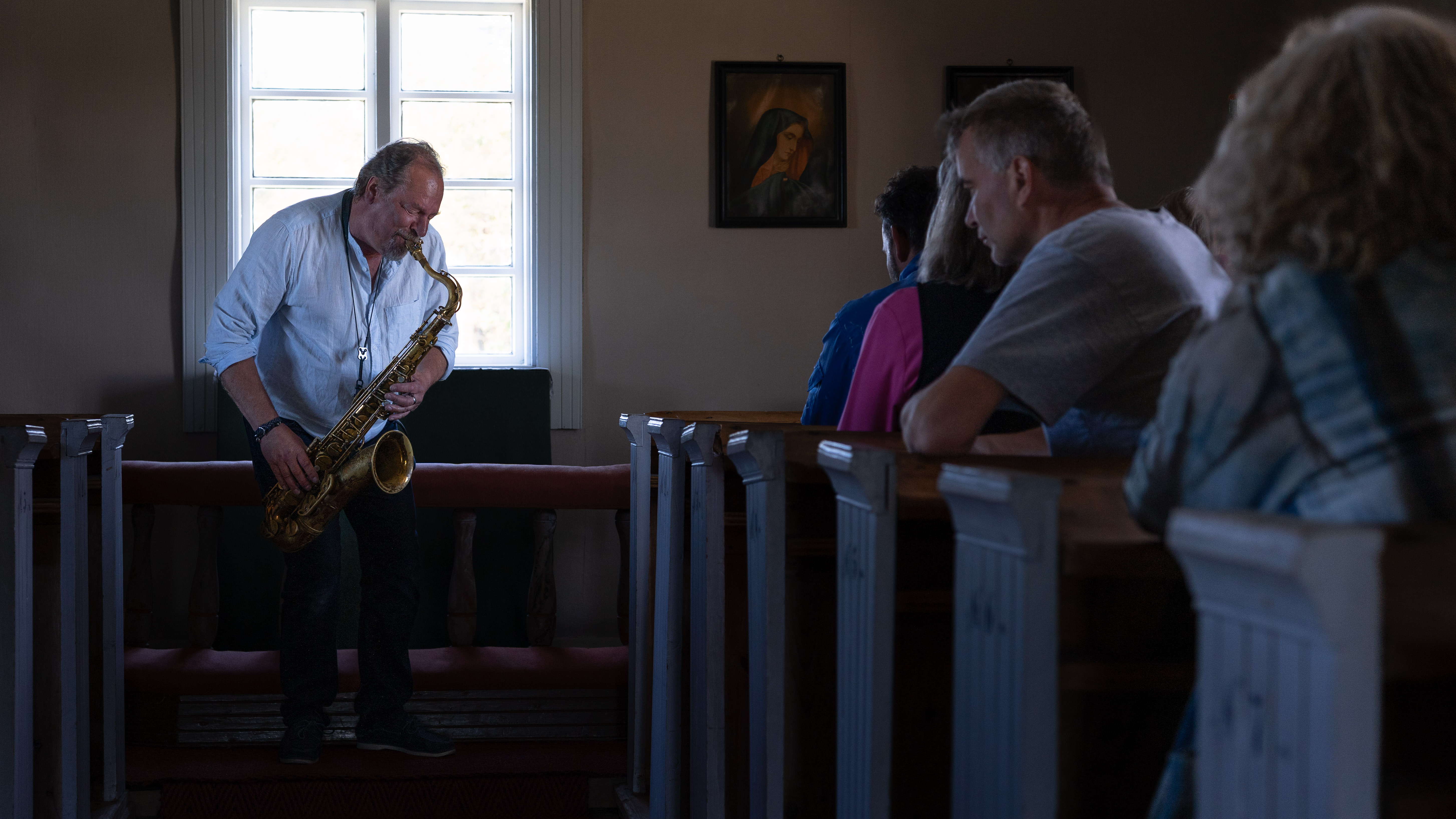
Opening programme of INTER, Jurmo: visitors gathering around the installation outside the chapel and Esa Pietiläinen performing inside Jurmo chapel. Photos: Joonas T. Laine.
Process and Material
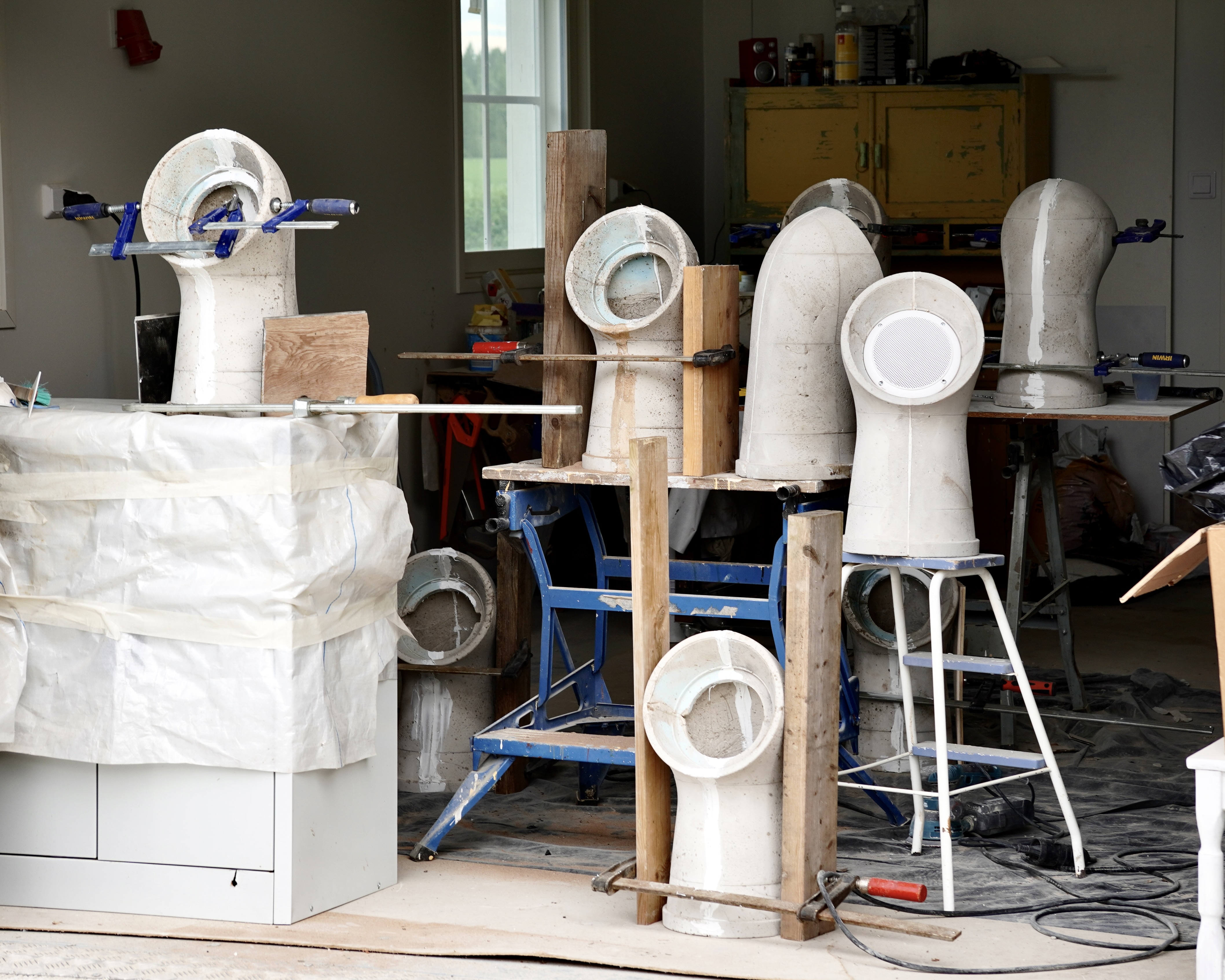
Hand-cast cowl speakers in process, before being placed in Jurmo’s weather.
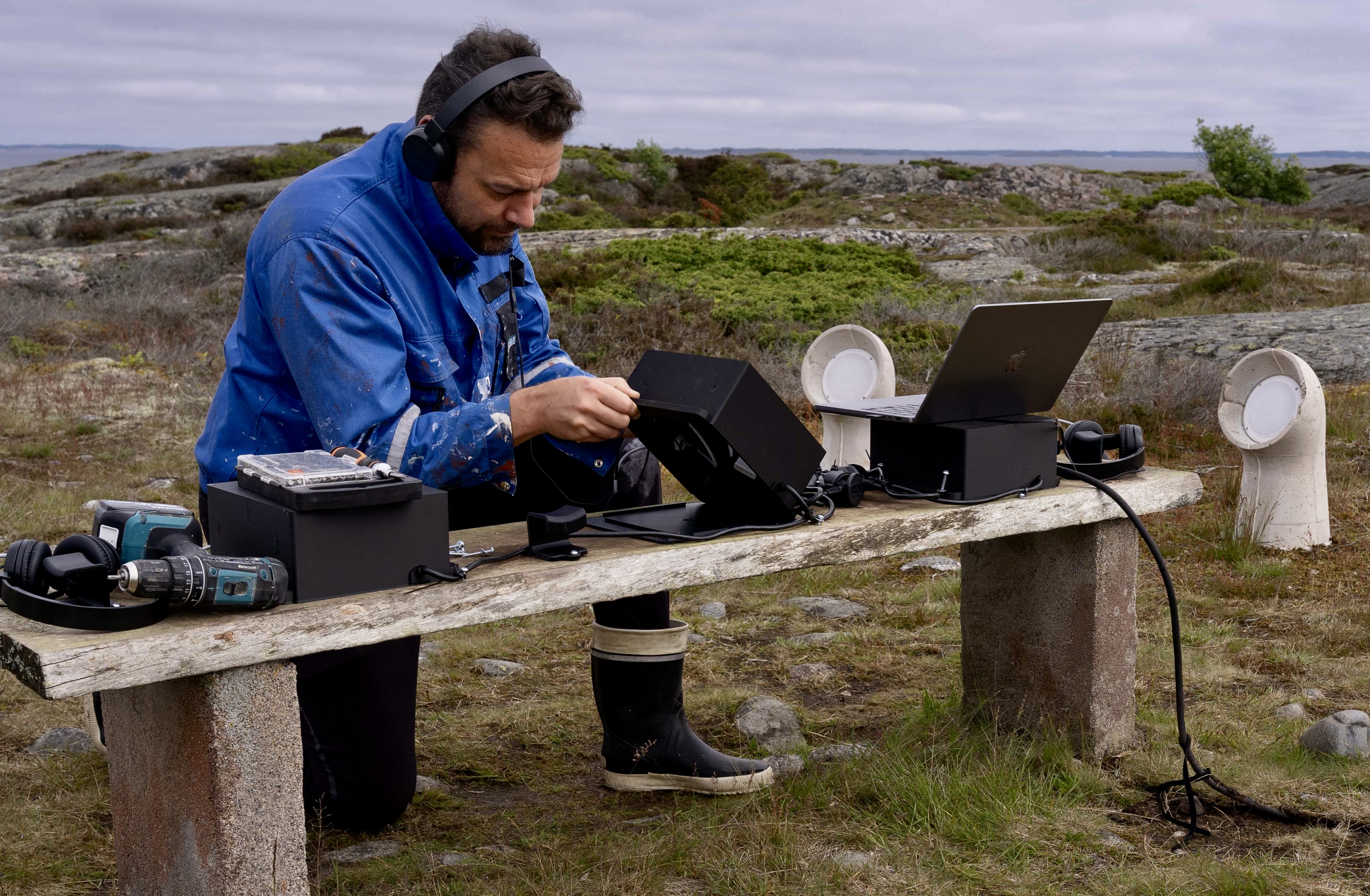
Installation process on Jurmo. Photo: Joonas T. Laine.
The work was developed through recordings, conversations, listening sessions, material tests, and on-site adjustments. The process was not separate from the final form. It was the way the work learned the conditions of the island.
The outdoor speakers were built for Jurmo’s weather and distance. Their form is drawn from ships’ ventilation flues and marine cowl vent structures: channels that connect spaces rather than point in a single direction.
Their form also carries a more local question. On Jurmo, people have had to adapt, repair, change, and renew their ways of living in order to meet the island’s conditions. The speakers follow the same logic. They are not objects placed against the island, but structures shaped by the need to belong to wind, rock, weather, distance, and use.
The speaker bodies are hand-cast concrete structures made from cement, fine sand, peat, soot, and local surface material. The form was not developed to become a visible design object. It was developed so that it could recede into the ground, stones, weather, and seasonal change of the island.
Their surfaces remain exposed to wind, moisture, salt, changing light, and the open horizon. Over time, they may gather weather, moss, and other traces close to the stones of Jurmo.
Jurmo chapel’s pump organ was recorded note by note. From these tones, a low, foghorn-like sound was composed. It moves between the recorded voices and helps bind the listening field together.
The material was not cleaned into purity. Speech was allowed to remain speech. Wind was allowed to remain wind. Interruptions, uneven rhythms, pauses, and the grain of shared rooms were kept where they belonged to the situation.
The final form is not a closed object placed in the landscape. It is a listening situation shaped by the island, the people connected to it, and conditions that remain partly beyond control.
Collaboration
INTER, Jurmo was developed in collaboration with the John Nurminen Foundation as part of the Meren puolella programme.
The collaboration supported the island-based process through local connections, recordings with inhabitants and people closely connected to Jurmo, and a shared focus on the Baltic Sea as a living cultural and ecological environment.
The work was supported by the Visual Arts Display Grant from the Arts Promotion Centre Finland, TAIKE, KUVI.
Opening: 16 June 2026.
On view until September 2026.
Visiting Jurmo
Jurmo can be reached by the m/s Utö commuter ferry from Pärnäs harbour in Nagu. The crossing takes approximately three hours, moving gradually from the inner archipelago toward the open sea.
The journey is part of the work’s threshold. The island begins before arrival, in the slow change of distance, weather, light, and water.
Travel on the ferry is free of charge, but advance booking is required through the Finferries booking system.
Please check the current timetable and booking instructions before travelling.
 JAAKKO AUTIO — SPATIAL LISTENING ARCHITECTURES