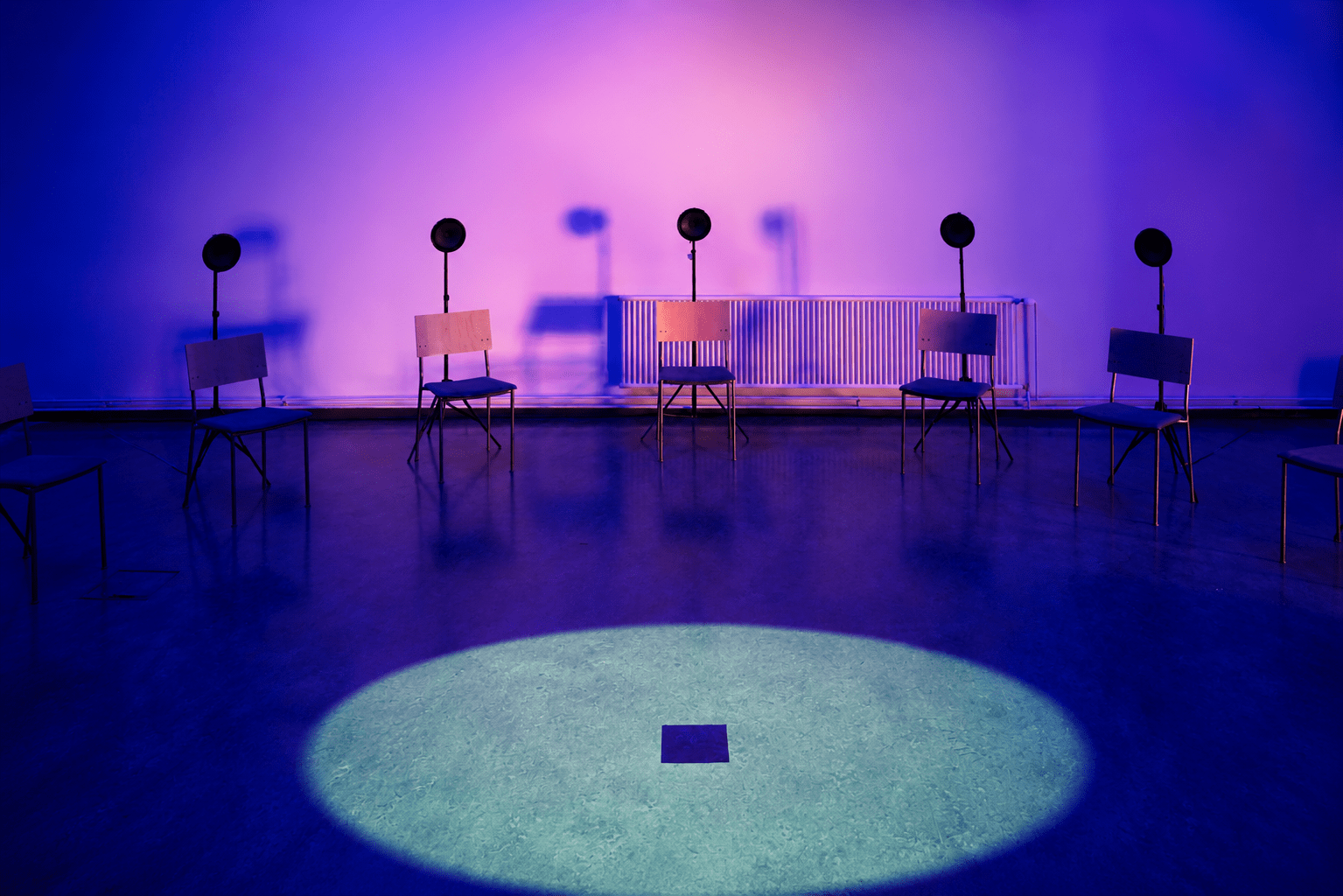
INTER SERIES: SALATTU
A listening room for what remains hidden
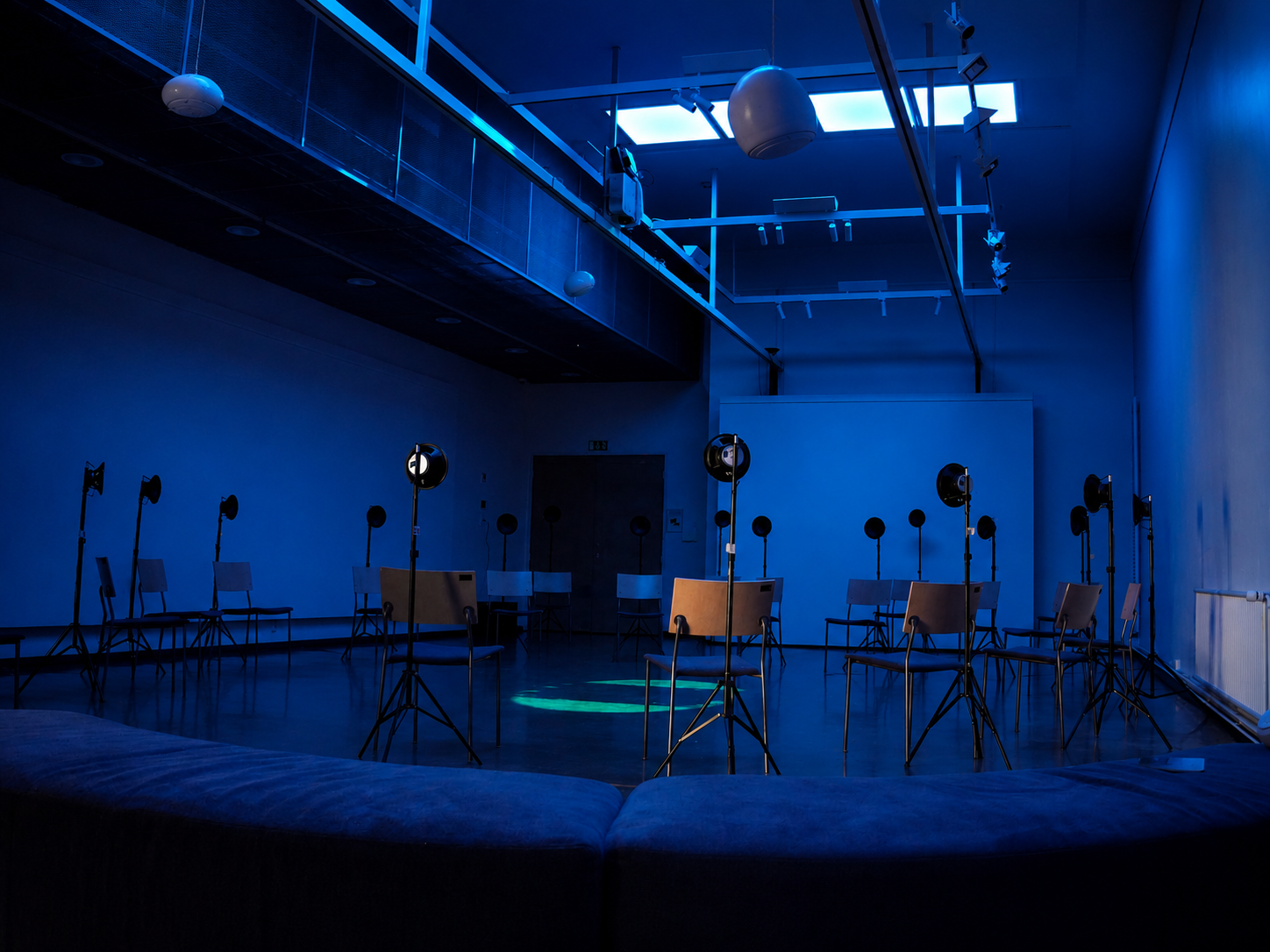
30-channel spatial sound installation with generative video
Galleria Oiva, Ylivieska
3–5 July 2026
SALATTU rakentaa kuunteluhuoneen.
Huoneen, jossa ääni ei ole esitys vaan ympäristö. Missä ihminen, tila ja yhteisö voivat kuunnella toisiaan ilman, että mitään tarvitsee ratkaista.
Teoksen lähtökohtana on Siionin virsi 100 – Salattu voima. Virsi ei ilmesty teoksessa sellaisenaan. Sen hengitys, hiljaisuus ja sisäinen paine avautuvat tilallisena äänenä.
Salattu ei ole tässä teoksessa vain hengellistä.
Se on myös ruumiissa.
Teos rakentuu neljän äärellä olevan voiman varaan: Raudaskylän sekakuoron paikalliseen ja hengelliseen jatkumoon, Anna Voutilainen-Veijosen saksofonin kuuntelevaan alkuvoimaan, Esa Ruuttusen äänen hengelliseen painovoimaan sekä Jurmon kappelin vanhan polkuharmonin borduunaan.
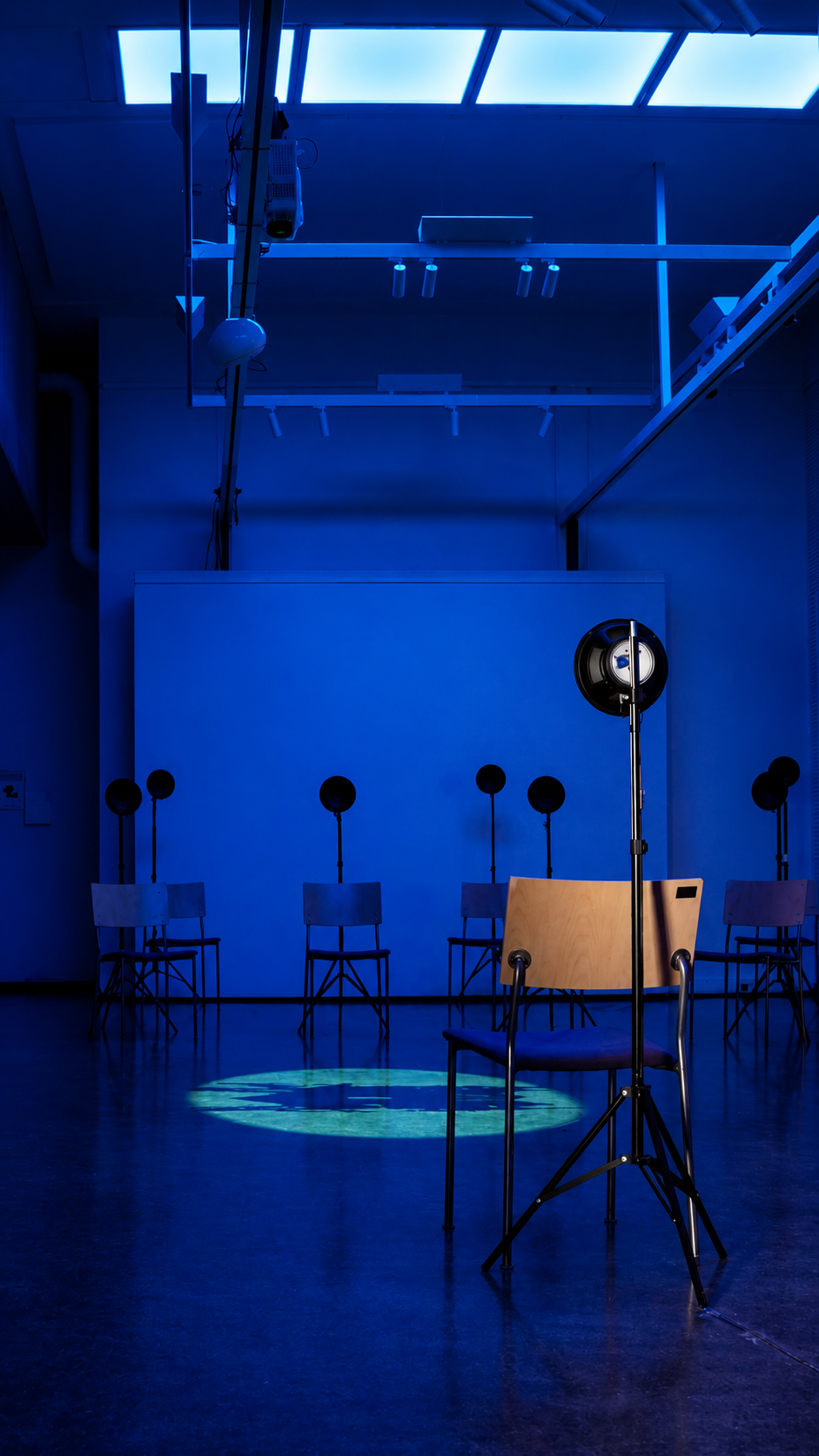
Ääni ei toimi esityksenä vaan ympäristönä. Kävijän liike, etäisyys ja viipyminen muokkaavat kokemusta. Yhtä keskipistettä ei ole.
Teos ei pyydä kävijää astumaan nykytaiteen kieleen.
Se pyytää astumaan huoneeseen, kuuntelemaan ja viipymään.
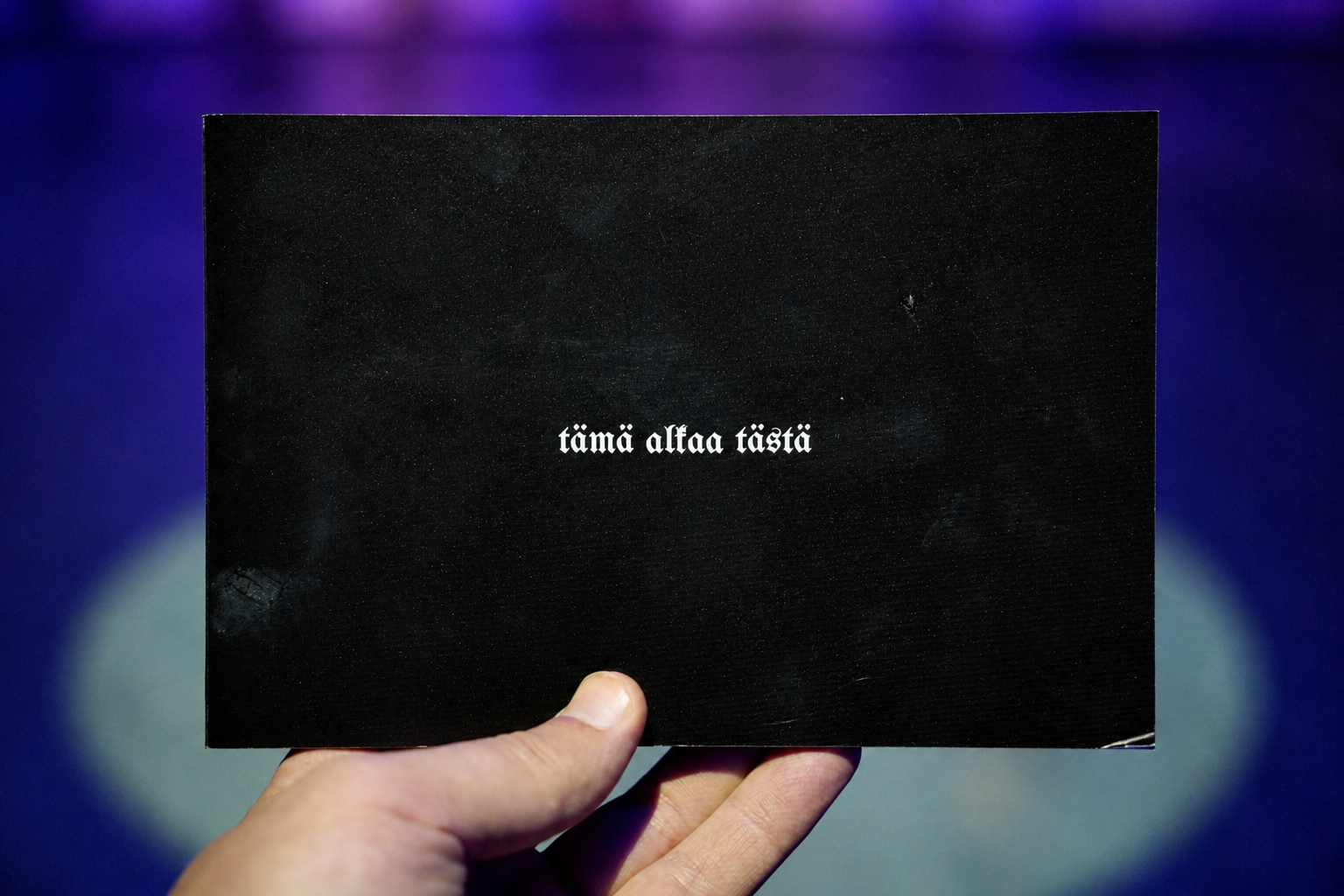
Book / Kirja
A 32-page book carried from the installation: voices, breath, saxophone, harmonium, floor, light, and a room for what remains hidden.
SALATTU
A listening room for what remains hidden
SALATTU builds a listening room.
Not a room for explanation, but for remaining.
Sound does not function as performance. It becomes environment.
The work invites people, space and community into a shared act of listening.
The sonic point of departure is Siionin virsi 100, the Finnish pietist hymn Salattu voima (Hidden Power).
The hymn never appears as such.
Its structure, breath, silence and inner pressure unfold as spatial sound.
In Finnish, salattu carries something no single English word contains: hidden, concealed, withheld, something that exists before language reaches it.
What remains hidden is not only spiritual.
It is also bodily.
Sound does not lead toward an answer.
It builds a room where questions may remain.
Listening emerges through relations:
between sounds,
between bodies,
between people,
between silence and voice.
The visitor’s movement, distance and duration shape the work.
There is no privileged listening position.
The work begins from rest.
Not rest as conclusion, but as permission:
the permission to remain in a room without needing to defend one’s place in it.
A short vocal utterance opens the work:
on salattu.
What follows is not devotional calm but a bodily rupture.
Choir and saxophone enter together, breaking the expectation of melody before it can settle.
What remains hidden is not hidden from the world.
It is hidden from the mind that tries to grasp it.
Four Forces
SALATTU is built around four forces.
The choir forms the outer circle.
Raudaskylä Mixed Choir is not treated as a neutral ensemble, but as a local body of voices shaped by generations of gathering.
Founded by Anna Ängeslevä after recognising the singing people of local pietist meetings, the choir has carried hymn, village, school, family, funeral, celebration and everyday life through voice.
For this choir, Siionin virret have never been only repertoire.
They are a way of beginning.
Lessons, rehearsals and gatherings have opened through hymn singing and shared breath.
The choir sings mostly without words:
open vowels,
breath,
sustained tones.
Only one phrase returns:
on salattu.
Within this circle are three inner voices.
Anna Voutilainen-Veijonen’s saxophone opens a bodily force inside the work.
Its sound carries the memory of an empty church:
resonance,
solitude,
freedom,
listening.
Esa Ruuttunen’s voice brings another kind of gravity.
Born in nearby Nivala, his voice carries the same ground as the choir and the harmonium.
He does not explain the hymn.
He allows its weight to become audible.
The fourth force is a drone played on the old pedal harmonium of Jurmo Chapel.
Its age is uncertain.
Within the work it becomes ground:
breathing,
time-worn,
enduring.
Together these four forces form the listening field of SALATTU.
The Image
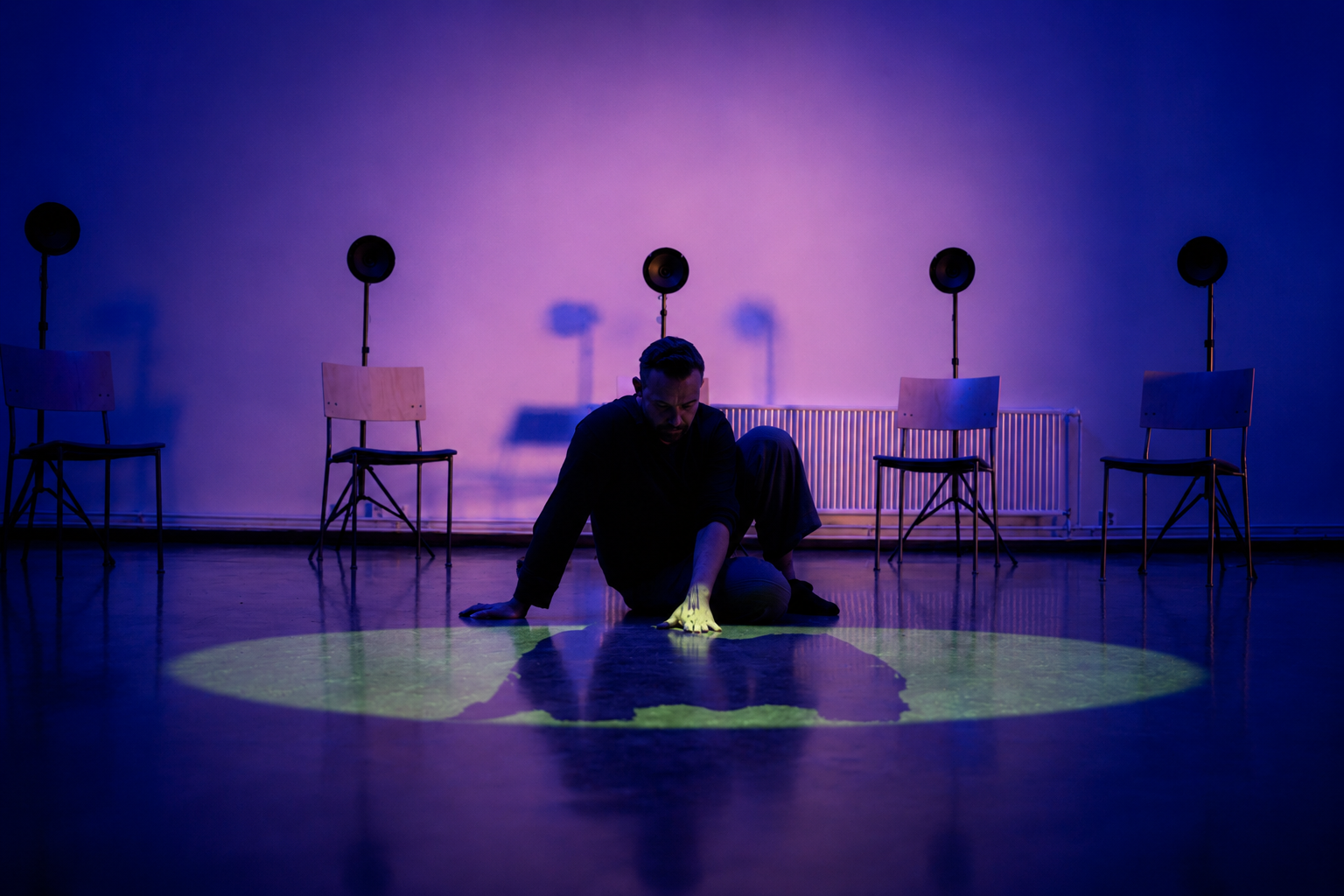
A generative shadow projection unfolds across the floor.
The shadow makes visible what cannot be approached directly.
Its forms move like mycelium, tissue, soil and unknown growth:
networks without a centre.
The image responds continuously to the collective movement of people in the room.
It follows no performer and no musical score.
It appears through the relationships that emerge in the space.
The image is authored as a system rather than a sequence.
The Encounter
Ylivieska is where I was born.
In 2026, Herättäjäjuhlat brings thousands of people to the town.
For a few days the city fills with greetings, conversations, recognition and reunion.
SALATTU opens a quieter room inside that gathering.
Galleria Oiva becomes a place to rest,
listen,
and remain near the sacred without needing to explain one’s relationship to it.
The work does not require knowledge of contemporary art. It asks for presence, time, and the willingness to remain.
During the Herättäjäjuhlat weekend, SALATTU was visited by 2,303 people.
For me, this number does not primarily describe scale. It describes contact. The work was not encountered only by an art audience, but by people arriving from the wider rhythm of the gathering: families, festival visitors, local people, singers, passers-by and those who simply needed a quiet room.
In this sense, SALATTU became what it was built to be: a listening room inside a larger communal body.
It asks only for a willingness to remain in a room with others,
and with what cannot quite be named.
Rest is not the final state of the work.
It is the condition that allows deeper questions to move:
May I be here?
May I belong without being measured?
What in me still remains hidden?
The work does not answer these questions.
It builds a room in which they can be heard.
The INTER Series
The INTER Series is not defined by subject matter, but by a structural question:
What exists in between, before experience becomes named, before meaning settles?
Each work constructs a perceptual field in which relations are experienced rather than observed.
The work does not add another layer to reality.
It changes how relations within a place can be perceived.
The series takes its name from the Latin inter:
between,
among,
during.
Not as metaphor,
but as an operational principle.
Where the RE Series investigated collective listening as shared presence,
the INTER Series turns toward the interval itself:
holding perception open rather than directing it.
SALATTU approaches this through interiority:
concealment,
collective voice,
bodily knowledge,
tradition,
and the enclosed room.
INTER Jurmo approaches it through exteriority:
landscape,
exposure,
and environmental listening at the edge of the sea.
The material conditions differ.
The operation is the same.
Working Group
Raudaskylä Mixed Choir
A local choral community rooted in the Ostrobothnian pietist singing tradition.
Choral direction, compositional work with the choir and saxophone: Anna Voutilainen-Veijonen
Vocal solo: Esa Ruuttunen
Pedal harmonium: recorded in Jurmo Chapel
Sound and video installation: Jaakko Autio
 JAAKKO AUTIO — SPATIAL LISTENING ARCHITECTURES