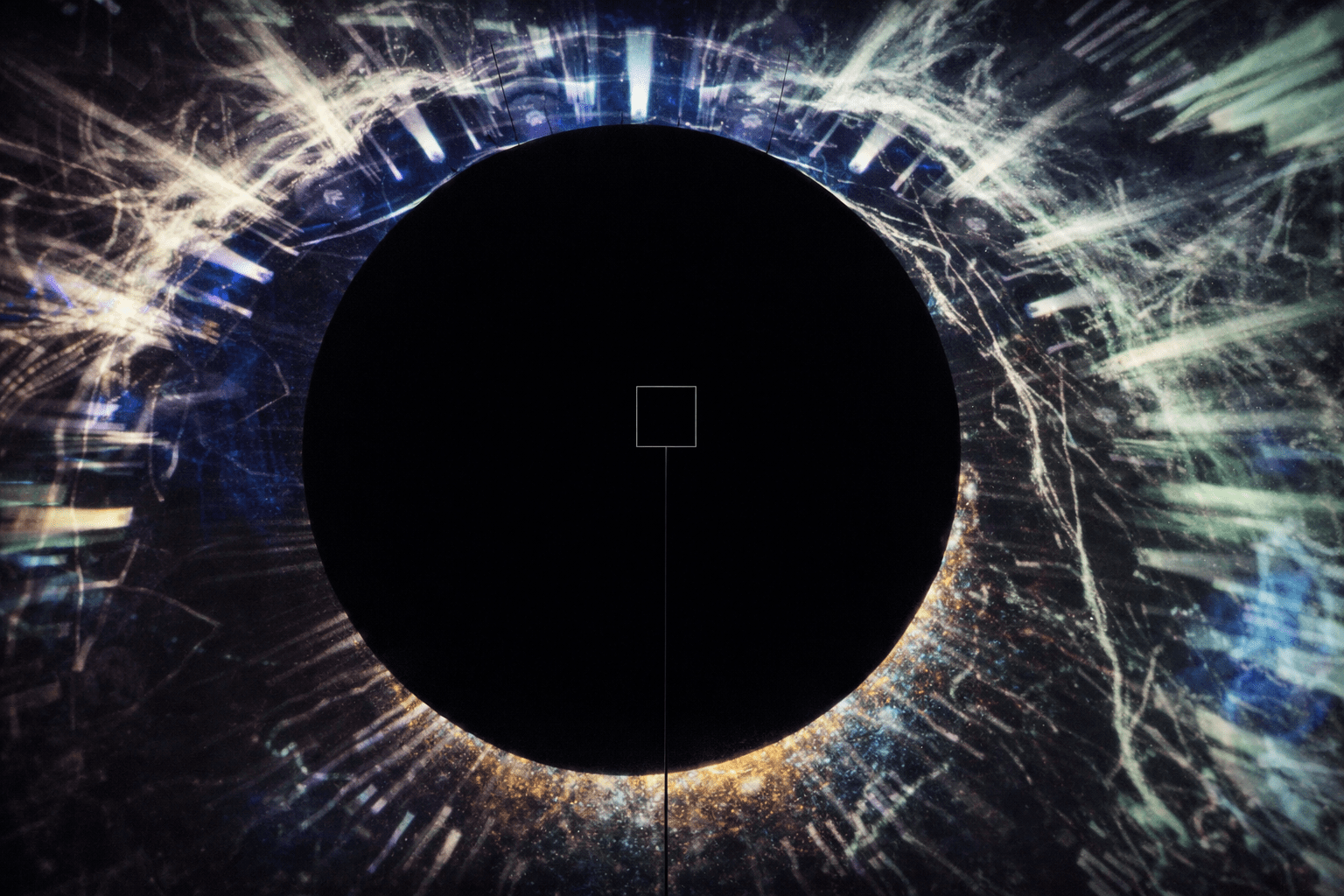
BORDER SERIES IV — POSSIBLE WORLDS (2024–2025)
Narva Art Residency, December 7, 2024 – February 3, 2025
Part IV of the Border Series (2022–2025)
I returned to Narva one more time.
Not with urgency. Not to resolve anything. The series was not finished, and Narva still had something to say that I had not yet been able to hear.
During the residency we watched archival footage of Gagarin leaving Earth’s gravitational field. The raw sound of it. A man leaving everything known behind. The men in the room recognised something in it and began to speak.
One said he was born in a country that no longer exists. Another insisted the International Space Station is not American. It is Russian. The rockets still launch from Russian soil. My own narrative about space turned out to be incomplete.
They kept going. The Soviet Union had expanded not only across land but toward the sun. For them, the universe itself carried that memory.
I chose to stay with that. Not to protect myself from it. To let it be what it was for them.
Later, when the room was quiet and the guards were down, I asked where is your homeland.
The answers were different for each person. Some thought in Russian but felt Estonian. Some the reverse. No one dissolved. No one agreed. And yet something held.
One evening in the sauna we cried for hours speaking about love. No slogans. No theory. Just the difficulty of staying.
This experience shaped the structure of the exhibition.
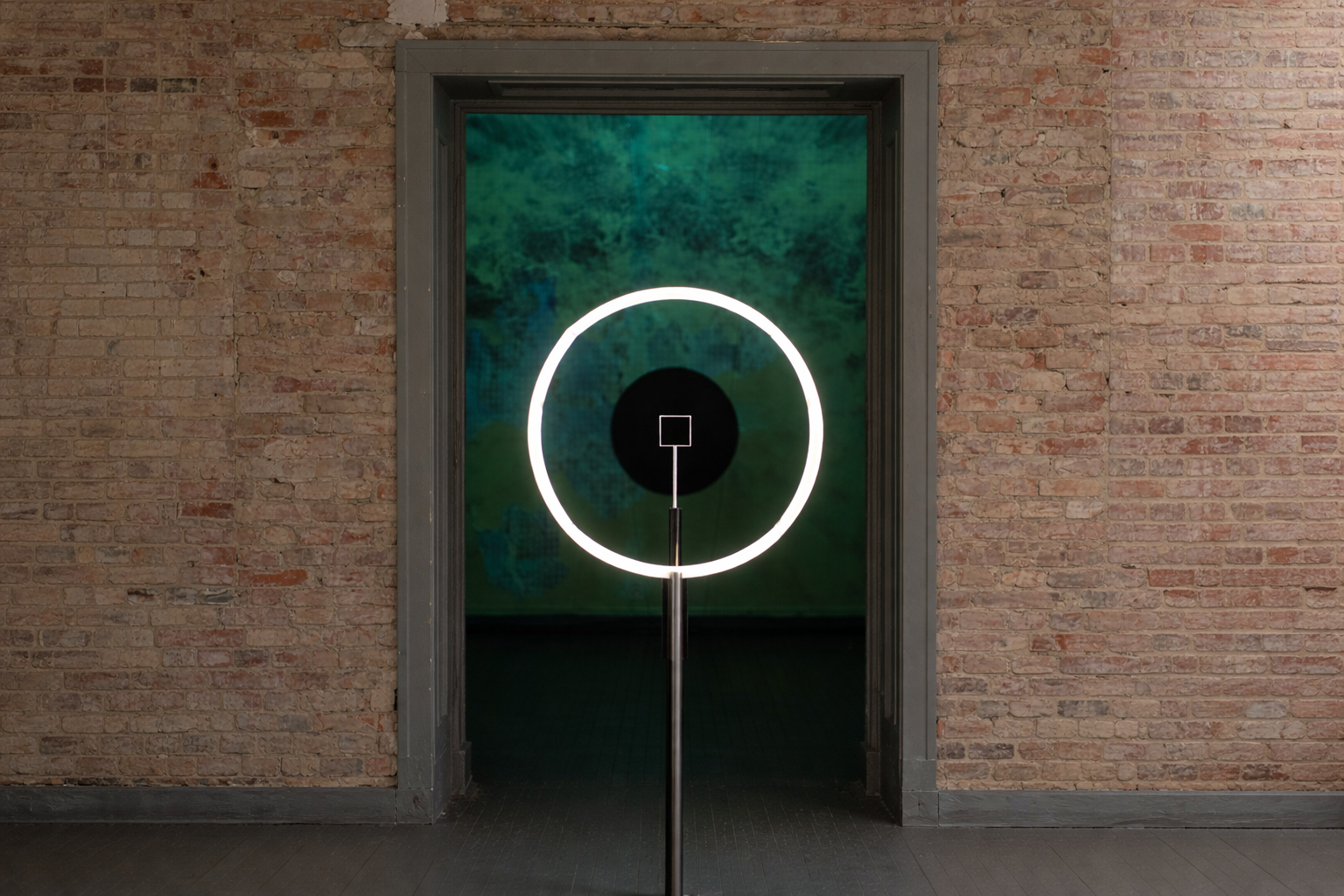
I built a spatial sculpture from precise measurements, designed in 3D as an impossible form. Viewed through a circular opening from one side, it appeared as a circle with a dark void at its centre. Viewed through a square opening from the other side, the same object appeared square. Two opposing perspectives. One object. Both true.
The alignment locked the viewer into position. When walking around it, the form dissolved into an unstable abstraction that refused a single reading.
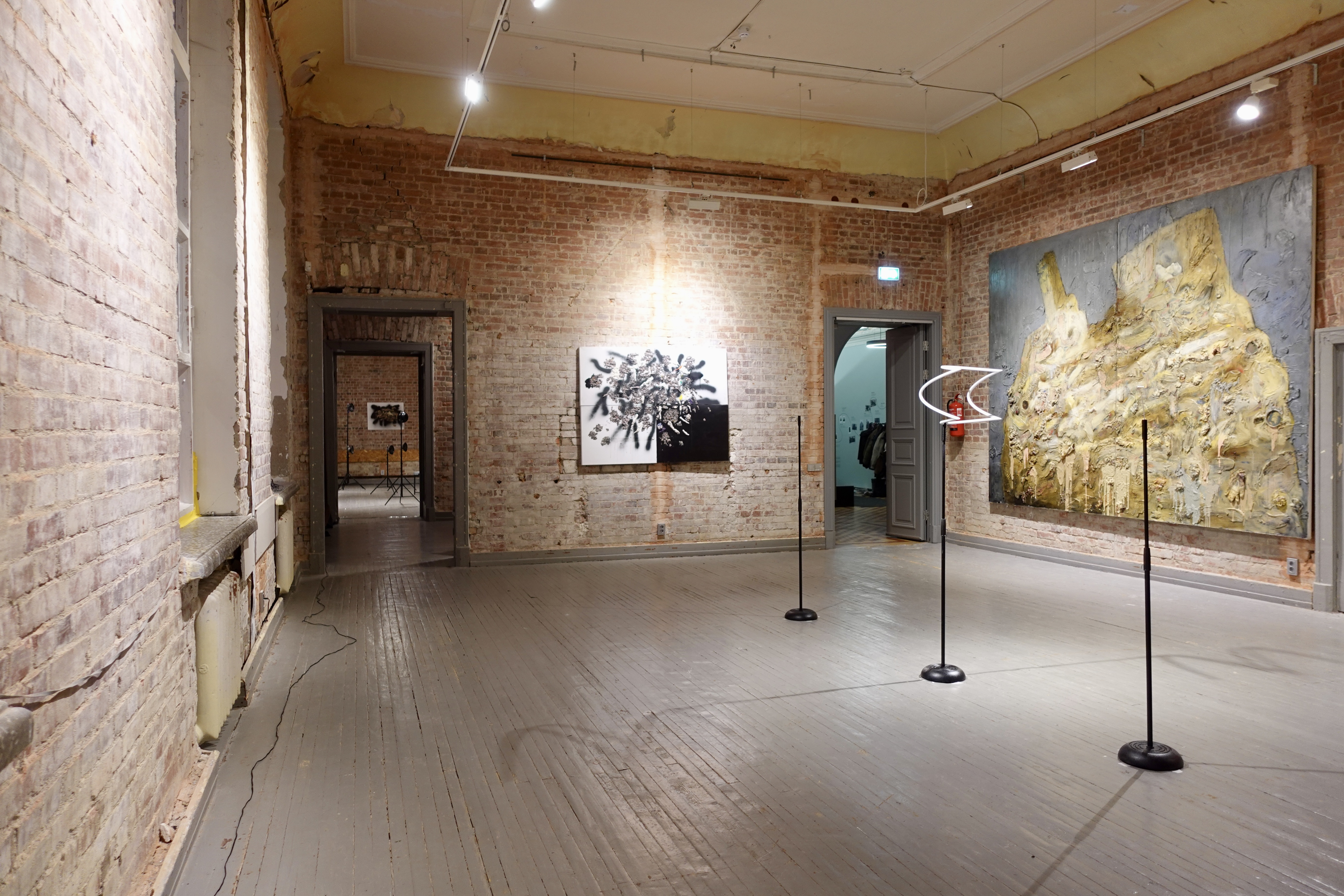
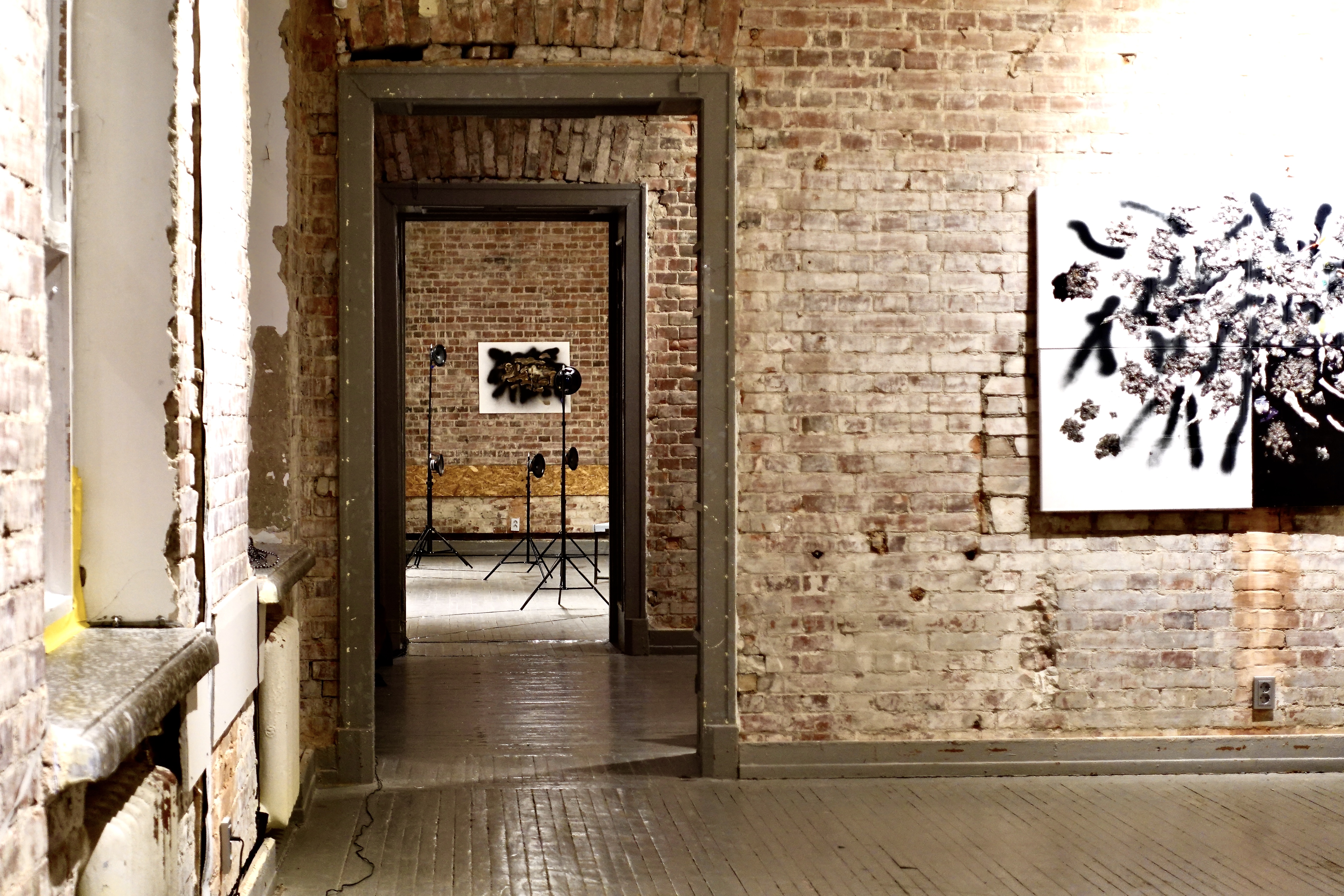
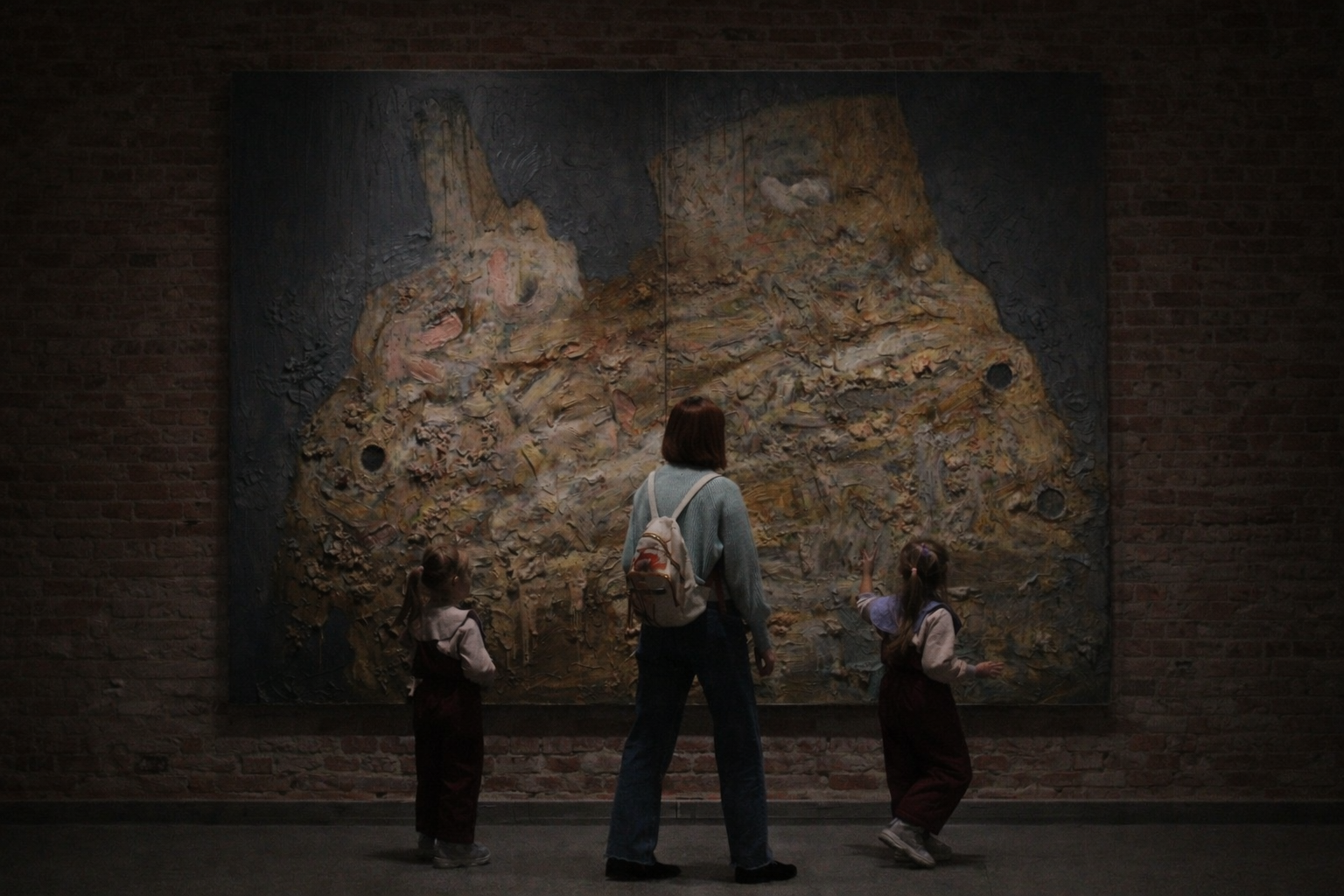
The exhibition unfolded across four rooms. Two large galleries and two smaller ones. Mika Vesalahti’s Tritonus paintings held the walls of the larger spaces.
I positioned the loudspeakers of OrigiNation in dialogue with his canvases so that sound and painting shared the same air.
In the final room I painted a black opening on the wall using Musou Black, the darkest paint available. Behind it, a full-wall generative horizon evolved in real time.
A threshold is not declared. It is approached.
The question was never:
Which world is correct?
The question was:
From where are you looking?
Coda
The Border Series began as an attempt to understand geopolitics.
In the first work there was still an external force — war, crisis, urgency. It gave direction and clarity. The world felt divided into positions.
Gradually that force shifted. The conflict did not disappear, but my relation to it changed. The need to define gave way to the need to remain.
By the third chapter, the gesture had become smaller. Sitting in a language classroom on a Monday morning without an agenda. Singing a single vowel and waiting for it to be answered. Nothing strategic. Nothing symbolic. Just presence.
In Narva, the fourth chapter, I realised that geopolitics is surface tension. Beneath it are people with favourite songs, inherited memories, and unanswered homeland questions.
The series ends not with resolution but with orientation.
Not with agreement, but with the capacity to stay in the room.
That is where possible worlds begin.
 Jaakko Autio — Contemplative Spatial Sound Art