BORDER SERIES III — HARMONY IN DISPLACEMENT (2023)
Haihatus Summer Exhibition, Joutsa, Finland, 2023
Part III of the Border Series (2022–2025)
Joutsa is a town of three thousand people. That summer, three hundred of them were Ukrainian refugees.
I started visiting the reception centre in the town centre. Not with a program. Not with a plan. I brought paper flyers the first time. They were politely put on the wall. Then someone told me: if you actually want something to happen, come to the Finnish language class Monday morning at 8.30.
I went.
I explained who I was and what I wanted to do, record an old Ukrainian lullaby together, The Dream Passes by the Window, a folk song free of copyright. A song where a displaced child asks where they will sleep, and the mother answers gently, perhaps untruthfully, that they will sleep in a warm house and drink milk sweetened with honey.
I could feel the hesitation in the room. Do we trust this or not.
I paid particular attention to the men. Participation in situations like this often tilts toward women. I wanted the structure to resist that default. One of the men pushed back and said he could not sing. I told him the men only needed to sing one note. I sang it. Aaaaaaaaaa. He sang it back. We both laughed with relief.
It took a few more visits to gather the WhatsApp contacts, sort logistics, arrange transport. People were living twenty kilometres from Joutsa. In the end, Risto drove his large car that fit ten people. Two other cars brought the rest. Ten had registered. Twenty arrived.
There were children, teenagers, adults. Some professionals. Many not.
Anna Voutilainen-Veijonen led the choir. Risto recorded forty channels, twenty dynamic microphones and twenty lapel mics. A volunteer ran a second recording station. Fredriikka Voutilainen looked after Anna’s baby so Anna could focus.
I sat on the floor and sang along without a microphone. I did not want to occupy a channel. Sometimes the field becomes clearer when one voice withdraws slightly.
I used the material as it was. No editing. No correction. I did not want to correct what was not mine to correct. You can hear everything, teenage impatience, adult negotiation, linguistic confusion, a quiet joke that someone else understands. At one point someone says ok dobrje. A small shared recognition. The field adjusts.
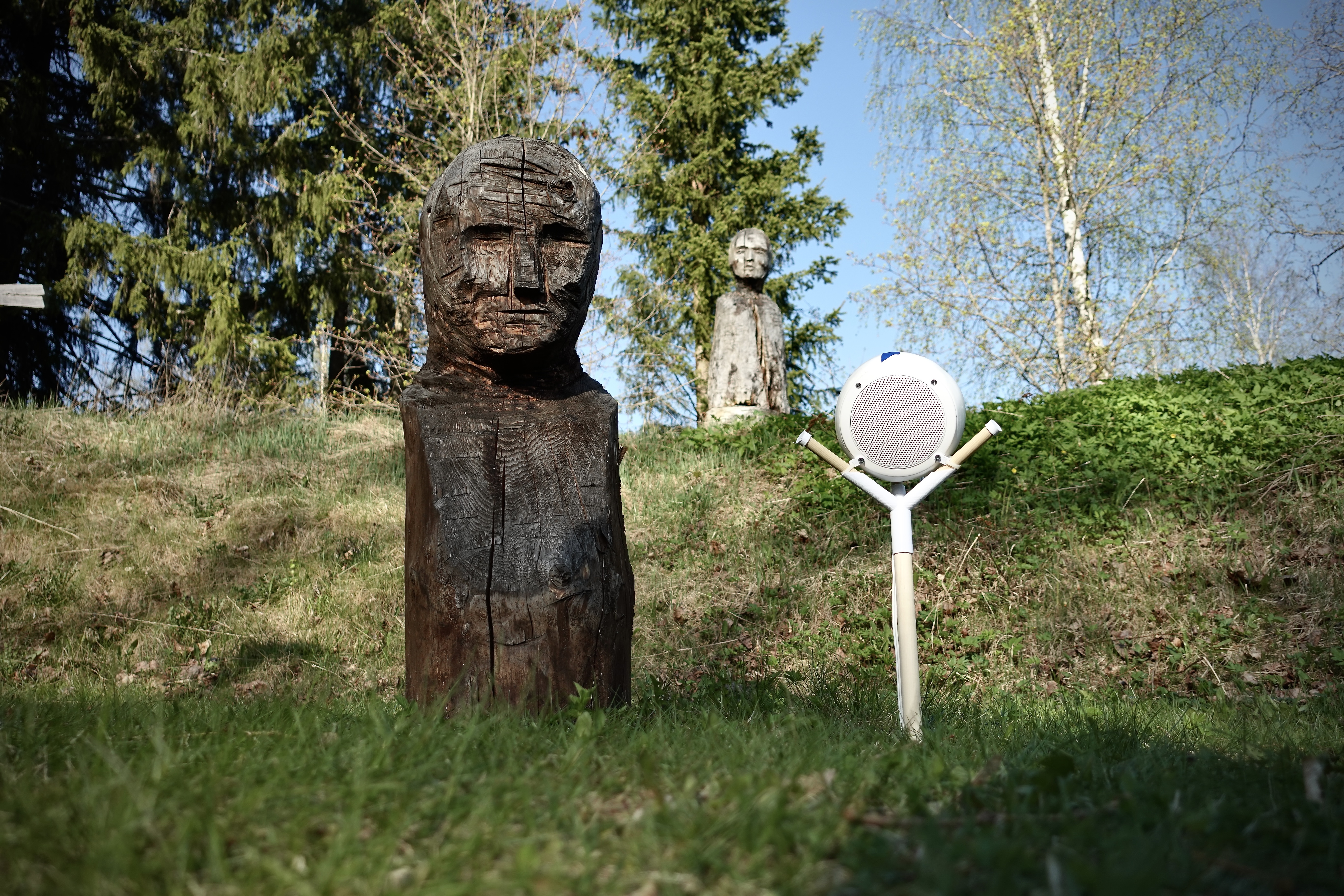
The installation moved outside to the amphitheatre at Haihatus, alongside Panu Ollikainen’s outdoor sculptural installation Saattoväki. I deliberately left his work present in the space. It belongs to the site and carries its own artistic field. I did not want to overwrite that.
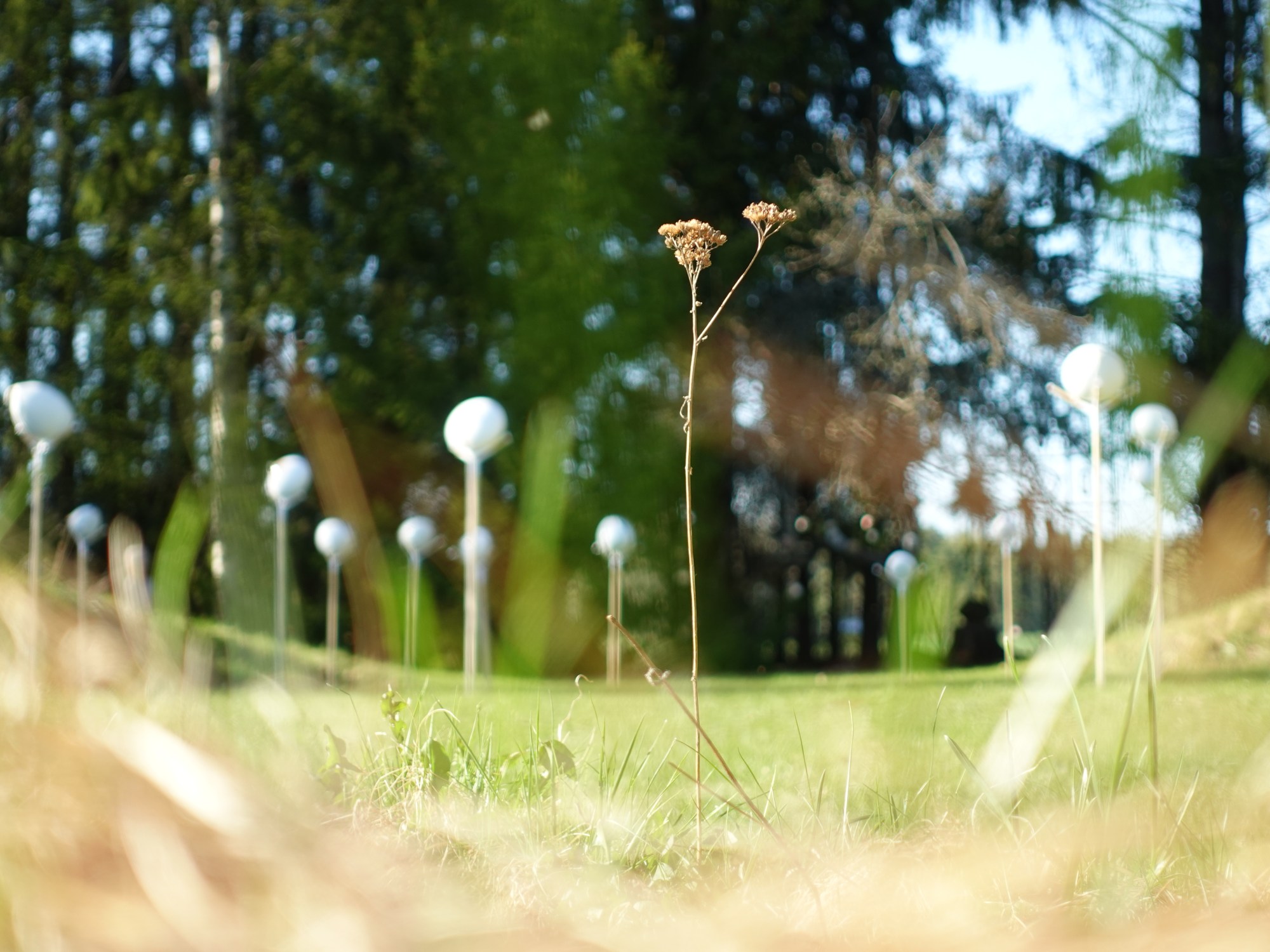
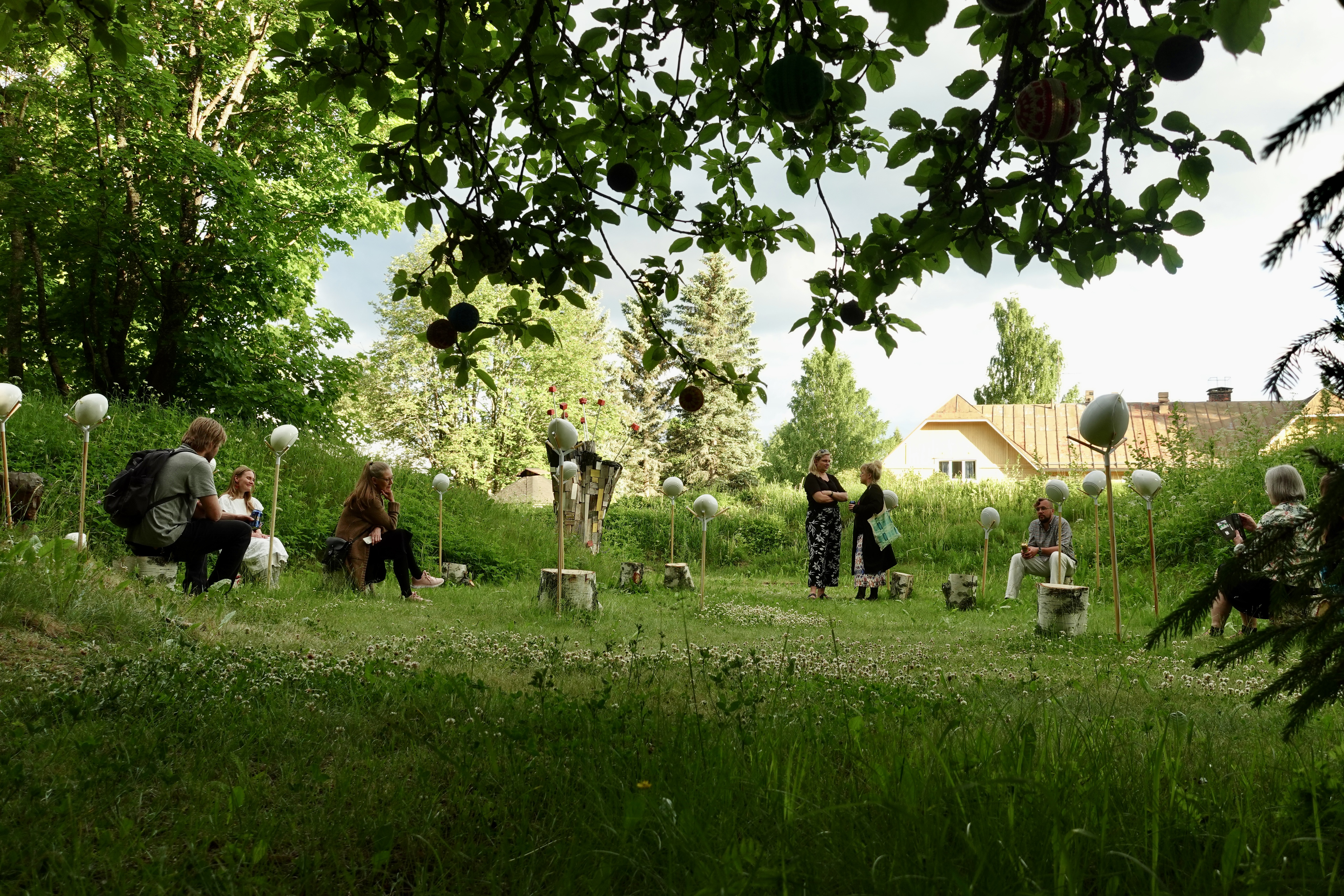
Twenty white loudspeakers circulated the voices through summer air. The sky was blue. The field was green. I had hoped for yellow. I wanted the Ukrainian colours. It was what it was.
Each individual voice came from its own speaker. You could follow any one of twenty people through the entire event, how each one moved toward something shared, imperfectly, without permission.
No one was asked to dissolve. And yet, something softened.
Local men from Joutsa stood in the installation and joked in Finnish, embarrassed by their own feelings.
People stayed for a long time. Some cried. Not because it was dramatic. Because it was ordinary.
The structure was simple. Twenty people. Twenty channels. One shared air. Nothing extraordinary was required. Only time.
Many people said I would never get enough people together for this. They were right about the difficulty. But I knew what I was doing.
CREDITS
Concept and Sound: Jaakko Autio
Choir Facilitation: Anna Voutilainen-Veijonen
Recording: Risto Cleaning Woman, Kari Mutenia
Movement Support: Fredriikka Voutilainen
Participants: Ukrainian refugees in Joutsa, local residents and invited musicians
Exhibited at Haihatus Summer Exhibition, Joutsa, Finland, 2023
 Jaakko Autio — Contemplative Spatial Sound Art